
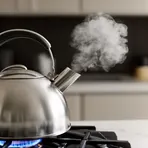
to steam
 10
5.1
10
5.1

- verb
- /stiːm/
- Archaic
- Army soldiers and Marines steaming toward the Marshall Islands.
Examples
-
The Advance steamed toward Wilmington, North Carolina, slipping easily past the Union's blockaders.
Fiction book (1998) -
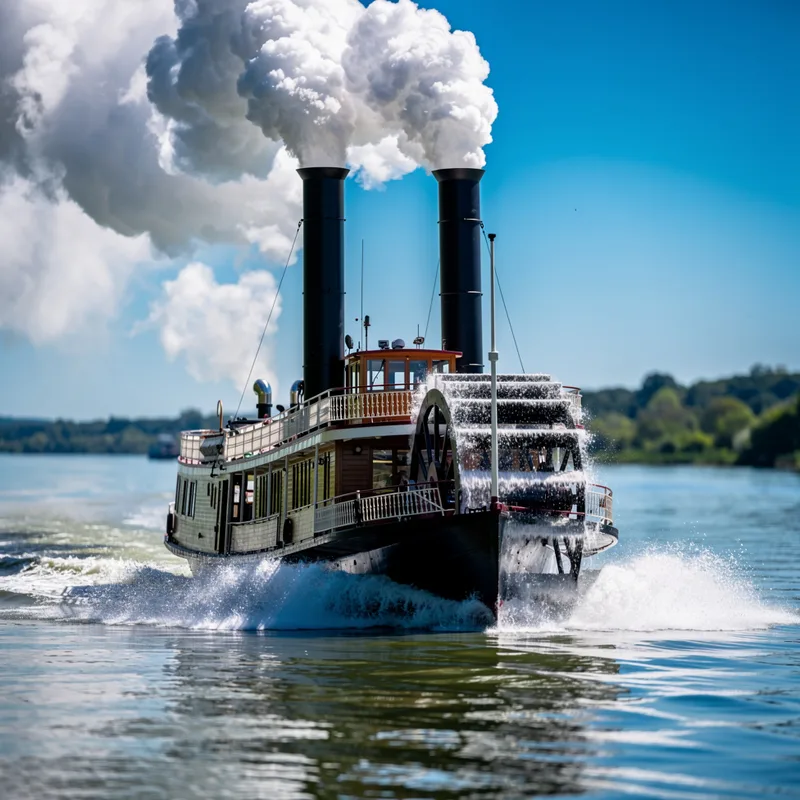
In the morning mist, the old-fashioned steamboat was steaming gently down the river.
-
By the next afternoon, we were steaming west from the coast of Ireland... with nothing out ahead of us but ocean.
-
We'll steam north for three days, and then start looking for an iceberg.
Fiction book (2001) -
You at the time were steaming at full speed through a fog bank.
-
A French battleship is steaming toward the coast.
-
Then the ship steamed up the Hudson River and docked somewhere right around.
-
For the first month, we steamed in circles, crossing and recrossing our course.
-
On its final voyage, Mary Celestia steamed out of Hamilton, Bermuda, with owner William Crenshaw and Bermuda pilot John Virgin aboard.
Academic text (2011) -
The historic steam engine is steaming along the tracks, pulling a long line of carriages behind it.
Idioms

To use much more effort or help than needed to do a small task
Phrasal Verbs

- Informal
14
3.5
Do something active, like go for a run, to feel less angry or stressed



Compounds


- Specialized
10
3.5
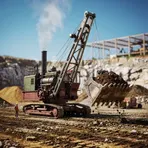
A machine that uses steam from hot water to move parts like pistons or wheels



- Archaic
2
5.7
A large machine with a bucket that digs and moves earth in construction and mining



- Specialized
 1
3.9
1
3.9
A closed tank that heats water to make steam to power machines or heat buildings

- Specialized
1
3.5
A system that makes hot vapor in a heater to warm rooms through pipes and radiators
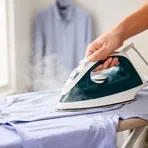


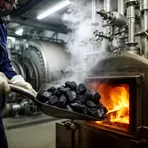
- Archaic
A solid fuel burned in steam boilers to make steam for engines or power plants
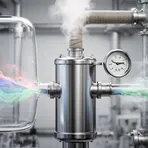
- Specialized
A machine that uses high-pressure steam to make a vacuum by pulling in liquids or gases

- Specialized
Work that installs and fixes pipes and machines for steam, heating or cooling systems

- Archaic
A musical instrument that uses hot air to make whistles played by a keyboard
How Fast

Surface Forms
Etymology
Steam first named the hot 'vapor' that powered early machines, and by the 1800s people used it for travel too, as in steamboat. That is why a ship or train could 'steam' along — it moved using steam power.