

star-glory
- noun
- The star-glory is prized for its bright red flowers that attract hummingbirds to the garden.
Examples
-
Gardeners often plant star-glory along fences so its vines can climb and create a colorful display.
-
In warm climates, star-glory can grow quickly and spread easily beyond cultivated areas.
-
The star-glory blooms beautifully in the summer.
-
Have you seen a star-glory in full bloom?
-
Gardeners often plant star-glory along fences so its vines can climb and create a colorful display.
-
In warm climates, star-glory can grow quickly and spread easily beyond cultivated areas.
-
The star-glory is prized for its bright red flowers that attract hummingbirds to the garden.
Synonyms
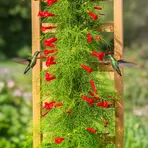
A climbing plant with thin feathery leaves and bright red tube-shaped flowers that attract hummingbirds

A tropical climbing plant with fine feathery leaves and red or white flowers
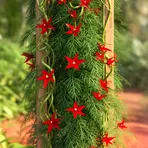
A climbing plant from tropical America with finely divided leaves and red star-shaped flowers
Surface Forms
Morphology
Etymology
The word star-glory comes from two simple English words, star 'a bright point of light in the sky' and glory 'great beauty or praise'. Gardeners gave this name because the plant's small, star-shaped red flowers and quick-climbing vines make fences and gardens look very showy, so the name matches the plant.

