
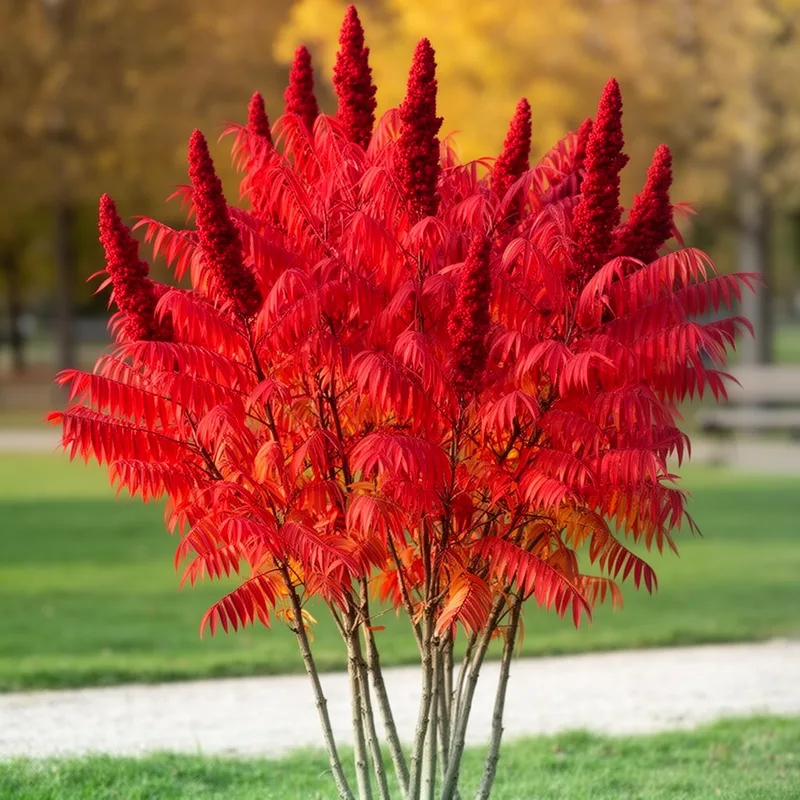
staghorn sumac
- noun
- /ˈsteɪɡˌhɔrn ˈsuːmæk/
- Specialized
- The brilliant red foliage of the staghorn sumac is a highlight of the fall landscape.
Examples
-
The staghorn sumac grows wild in many parts of North America.
-
Birds are attracted to the bright red berries of the staghorn sumac during winter.
-
A row of staghorn sumac shrubs lines the edge of the park, providing vibrant color in autumn.
-
Have you seen a staghorn sumac tree before?
-
The bright-red leaves of the staghorn sumac transform the landscape in autumn.
-
The staghorn sumac produces clusters of small, yellow-green flowers in late spring.
-
Birds love the tart, crimson berries of the staghorn sumac during the winter months.
Synonyms

A small tree or shrub that loses leaves in autumn and has bright red leaves and red berries
A North American shrub or small tree with groups of bright red berries

A small tree or shrub with velvety branches, bright red autumn leaves, and red berries

A small tree or bush with leaves that turn bright red in autumn and clusters of red berries
Surface Forms
Morphology
staghorn + sumac
The compound is clearly descriptive: 'staghorn' (stag + horn) indicates a shape like a stag's antlers and 'sumac' names the shrub, so the phrase denotes a sumac with antler‑like branches or inflorescences. This is a productive noun + noun/adjunct composition that follows common cross‑linguistic patterns, so a B1 learner who knows the constituents can infer the meaning.
Etymology
Staghorn sumac gets its name from the plant's young branches: the word staghorn points to the soft, fuzzy twigs that stick out like a 'stag's' antlers. So the picture of antler-like, hairy branches helps you remember this shrub with bright red berries and red leaves in autumn.

