
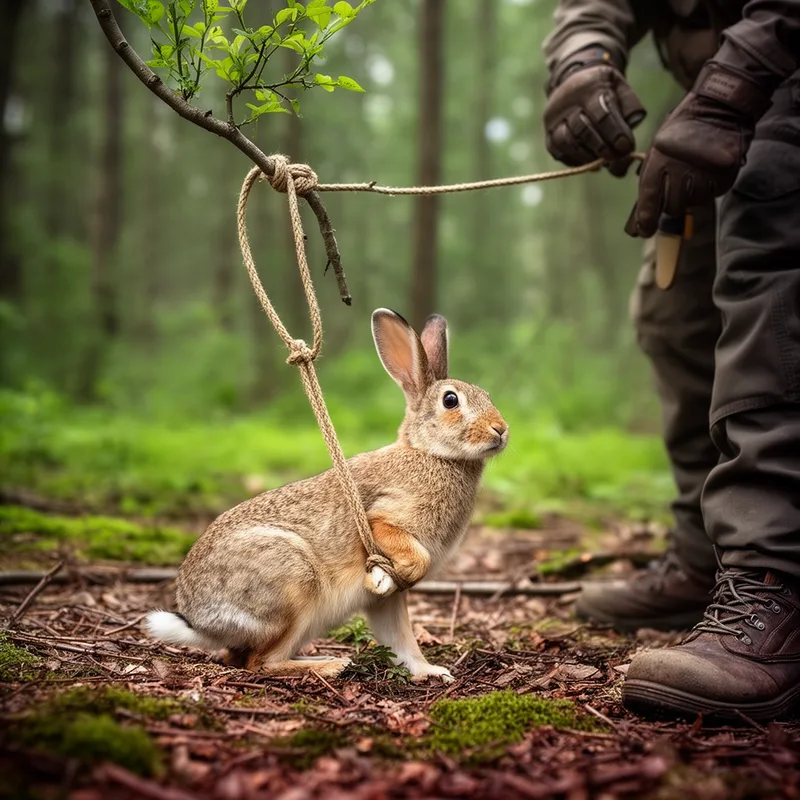
to springe
- verb
- Archaic
- He tried to springe the thief with a cleverly hidden rope.
Examples
-
The hunters hoped to springe several rabbits before nightfall.
-
In old tales, villagers would springe wolves to protect their livestock.
-
Why did you springe that animal?
-
Don't springe the animals without a reason!
-
The old farmer set a trap in the forest to springe a deer.
-
Using a net, the fisherman hoped to springe the fish that swam near the shore.
-
To catch the elusive bird, they decided to springe it with a snare.
Synonyms

 ∞
1.0
∞
1.0

To take hold of a moving person or thing to stop it
 18
5.6
18
5.6
To catch something, often by using a trap or a trick
 13
7.7
13
7.7
To trap someone or something, often by a trick when they are in a difficult situation
 8
7.2
8
7.2
To catch a person or animal by tricking them so they cannot escape
How Successful
277
3.2
 112
3.2
13
7.7
112
3.2
13
7.7
- Archaic
919
2.6
∞
1.0
Surface Forms
Etymology
Springe is related to spring, which means 'to jump'. To springe someone is to make a snare 'spring' shut so they are caught, so the origin shows it means 'to catch' or 'entrap'.