
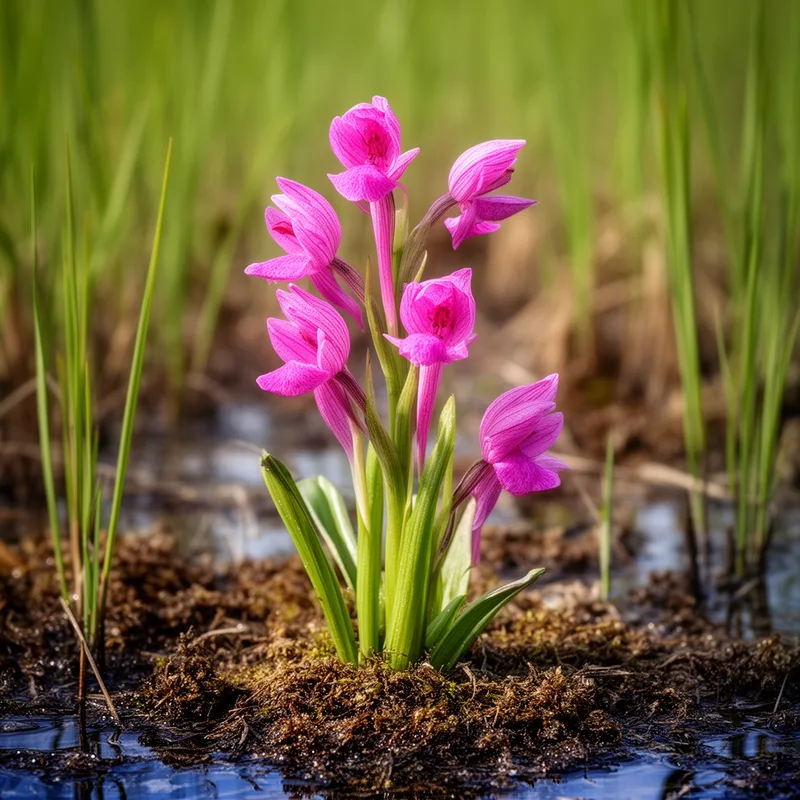
spreading pogonia
- noun
- US
- We spotted a rare spreading pogonia on our hike in the marsh.
Examples
-
The wetland was full of blooming spreading pogonia during the summer.
-
The spreading pogonia blooms beautifully in the spring.
-
Botanists often study the unique flowers of the spreading pogonia.
-
In the forest, I spotted a rare spreading pogonia.
-
The wetland was full of blooming spreading pogonia during the summer.
-
We spotted a rare spreading pogonia on our hike in the marsh.
-
The spreading pogonia blooms beautifully in the spring.
Synonyms
An orchid from the northeastern United States with bright pink flowers and a funnel-shaped lip

A wild orchid with funnel-shaped bright pink flowers that grows in the northeastern United States
An orchid with bright pink, funnel-shaped flowers that grows in northeastern US wetlands
Surface Forms
Morphology
This is a straightforward modifier+noun name: 'spreading' (extending or broad in habit) directly describes a 'pogonia' (a type of orchid), so the phrase denotes an orchid with a spreading habit. The compositional pattern is a common, literal way to form plant names in English (and similar in other languages), so a B1 learner who knows both constituent meanings can derive the MWE meaning.
Etymology
Spreading pogonia may come from the Greek word pogonia, meaning 'beard', because the orchid's lower lip looks hairy like a small beard. The word spreading describes how the petals and lip spread out, so the name helps you picture a pink flower with a wide, bearded opening.

