
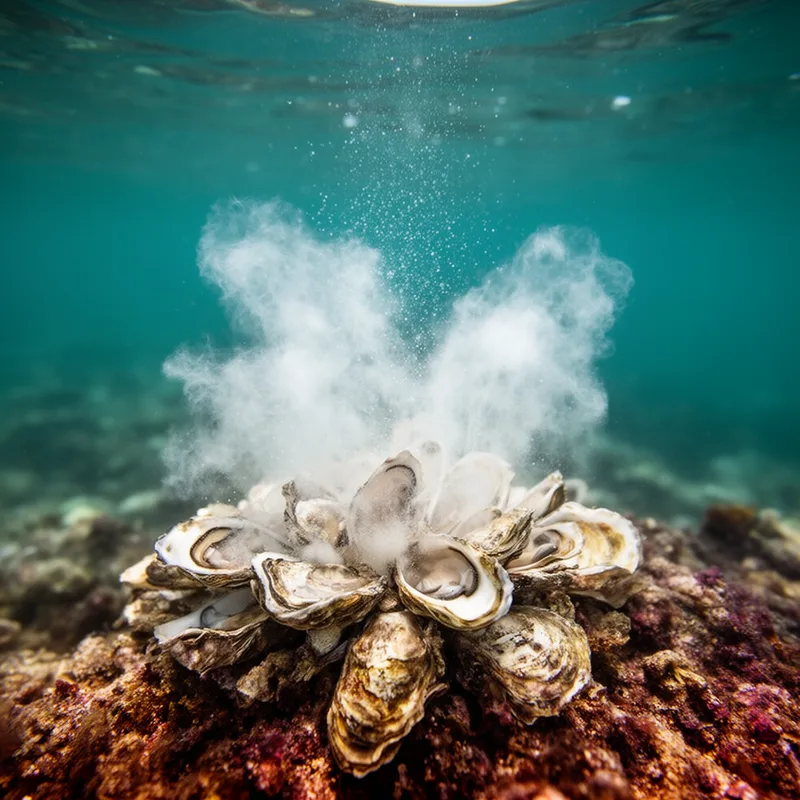
to spat
 7
9.9
7
9.9

To release eggs and sperm into the water to reproduce
- verb
- /spæt/
- Specialized
:
desovar
- During the spring season, many oysters spat their eggs and sperm into the water to reproduce.
Examples
-
The naturalist explained that oysters spat as a crucial part of their life cycle.
-
When conditions are right, the clam can spat hundreds of thousands of larvae into the ocean.
-
Each time a moth was caught, the researchers observed whether the bat ate them or spat them back out.
-
The laser printer chirred quietly and spat out a flimsy sheet.
Fiction book (1991) -
Suckers at the bottom of the tank ate this waste, spat it out in disgust, and roved on, still hungry.
Fiction book (1992)
Synonyms

Surface Forms
Etymology
Spat (to spawn) is linked to the idea of spit meaning 'to send out', because oysters and clams 'spat' their eggs and sperm into the water. So to spat can mean to release spawn.