
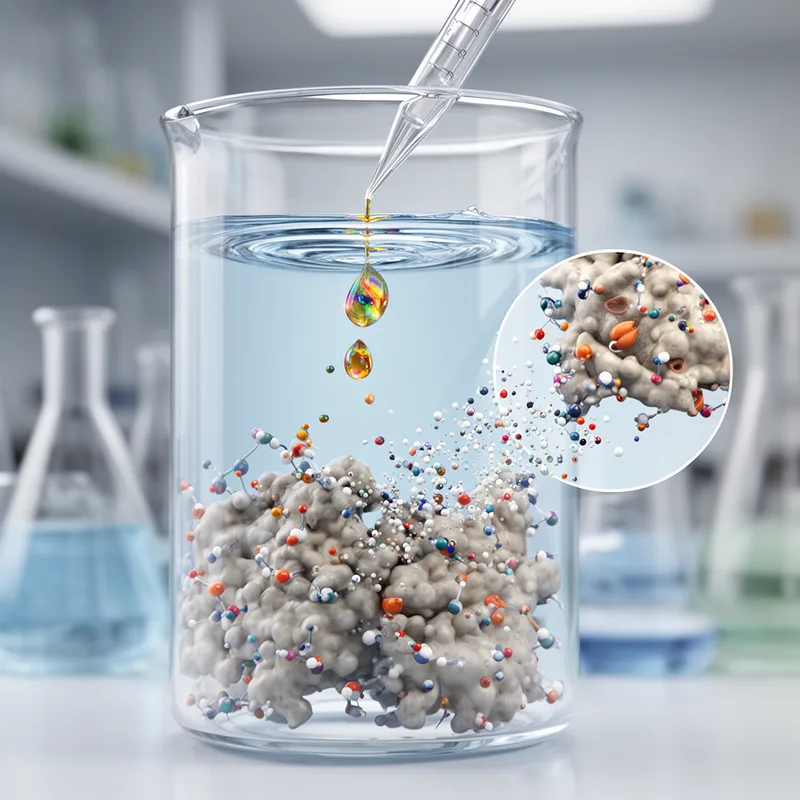
solubilization
- noun
- /ˌsɒl.jʊ.bɪ.lɪˈzeɪ.ʃən/
- Specialized
- Detergents are often used to aid the solubilization of hydrophobic molecules in the lab.
Examples
-
Can you explain the solubilization process in detail?
-
The solubilization of proteins is a crucial step in many biochemical experiments.
-
Proper solubilization ensures that membrane components can be analyzed accurately.
-
The solubilization of proteins is crucial for many biochemical experiments.
-
The solubilization of the protein in the buffer allowed for better analysis in the experiment.
-
Efficient solubilization is essential for accurate results in biochemical assays.
-
The enhancement of solubilization is crucial when working with difficult-to-dissolve substances.
Synonyms

 2
6.8
2
6.8

The process of a substance mixing into a liquid, like sugar in tea

A process where something mixes into a liquid to make a mixture
Liquid molecules surround and mix with small particles or ions to make a solution
Surface Forms
Morphology
solubilization = solubilize (transparent) = soluble + ize + ation
Formed by adding the deverbal noun suffix '-ation' to the verb 'solubilize' (itself 'soluble' + '-ize'), so the process meaning is directly derived.
Etymology
Solubilization comes from the Latin root solub- meaning 'to loosen' or 'to dissolve', like the words soluble and solution. So in the lab it means using liquids or detergents to make membranes or proteins 'dissolve' so they can be studied.