
solar gravity
- noun
- /ˈsoʊlər ˈɡrævɪti/
- Specialized
- Scientists study solar gravity to understand how it influences space weather.
Examples
-
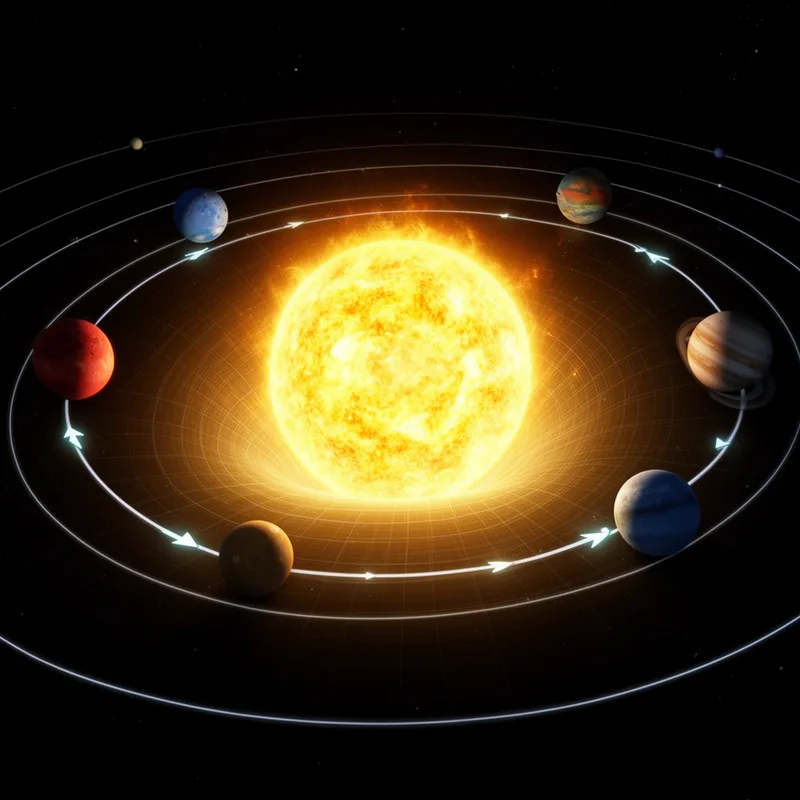
The intense solar gravity keeps the planets in their orbits around the sun.
-
The spacecraft needed a powerful engine to escape solar gravity and travel to deeper space.
-
The solar gravity affects the orbits of planets.
-
How does solar gravity influence Earth's climate?
-
As a spacecraft travels farther from the Earth, it is influenced more by solar gravity than by the planet's own attraction.
-
The concept of solar gravity helps us understand how comets are drawn towards the Sun during their orbits.
-
Scientists study how solar gravity affects the trajectory of objects moving through the solar system.
Synonyms

 7
4.2
7
4.2

A pull between all objects, especially Earth's pull on things near its surface
Surface Forms
Morphology
The meaning 'the gravitational force exerted by the sun' is directly and compositionally derived from 'solar' (relating to the sun) + 'gravity' (physical attraction/force). This is a straightforward noun-modifier combination common across languages, so a B1 learner who knows both constituents will readily infer the MWE's meaning.
Etymology
Solar gravity means the sun's strong 'pull' in space: solar refers to the sun and gravity is the 'pull' that keeps things close. That's why it keeps planets moving around the sun and why rockets need extra power to escape the sun's pull.