

snowmelt
 2
3.4
2
3.4

- noun
- /ˈsnoʊˌmɛlt/
- UK
 :
deshielo
:
deshielo
- Global warming, the researchers report, would cause snowmelt and runoff to start—and to peak—earlier in the year.
- snowmelt runoff
- spring snowmelt
- timing of snowmelt
Examples
-
Natural variations in surface topography create depressions that fill with water from snowmelt during summer.
Academic text (2011) -
The Upper Mississippi River and its tributaries respond regularly to heavy rainfall and snowmelt events by flooding low-lying areas along their reaches.
Academic text (2007) -
For example, the water may be available during the spring of the year following snowmelt in upstream areas.
Academic text (2000) -
Mountainous areas provide the best places and should provide sufficient snowmelt and rain to maintain the water supply.
Blog text (15) -
In addition to sewage, the single pipes convey surface drainage from rainfall or snowmelt to treatment facilities.
Academic text (1997) -
In the spring, during the time of the snowmelt, shellfish, herring, salmon, and other fish were part of the menu.
Academic text (2002) -
Snowpack has decreased, and the timing of snowmelt and peak runoff has shifted earlier in the spring.
Academic text (2016) -
Colonial Spaniards quickly recognized that ditch irrigation is one of the most effective means of diverting spring snowmelt and summer rains to croplands.
Academic text (2002) -
Reservoirs have played an important role in smoothing out the sharp seasonal peaks and troughs in water availability from western snowmelt-dominated rivers, and they give water users some protection from short-term droughts.
Academic text (2008) -
During spring, rivers swell with water from snowmelt, creating a beautiful view of nature.
Synonyms
 12
2.0
12
2.0
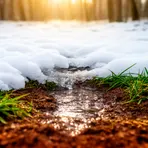
A period when snow and ice melt because the weather is warmer
Antonyms

How Rapid
- UK
2
3.4

- UK
12
2.0
Surface Forms
Morphology
Etymology
Snowmelt is a simple combination of snow and melt, and melt means 'to become liquid'. So snowmelt is the time or process when snow turns into water and often makes rivers rise.