
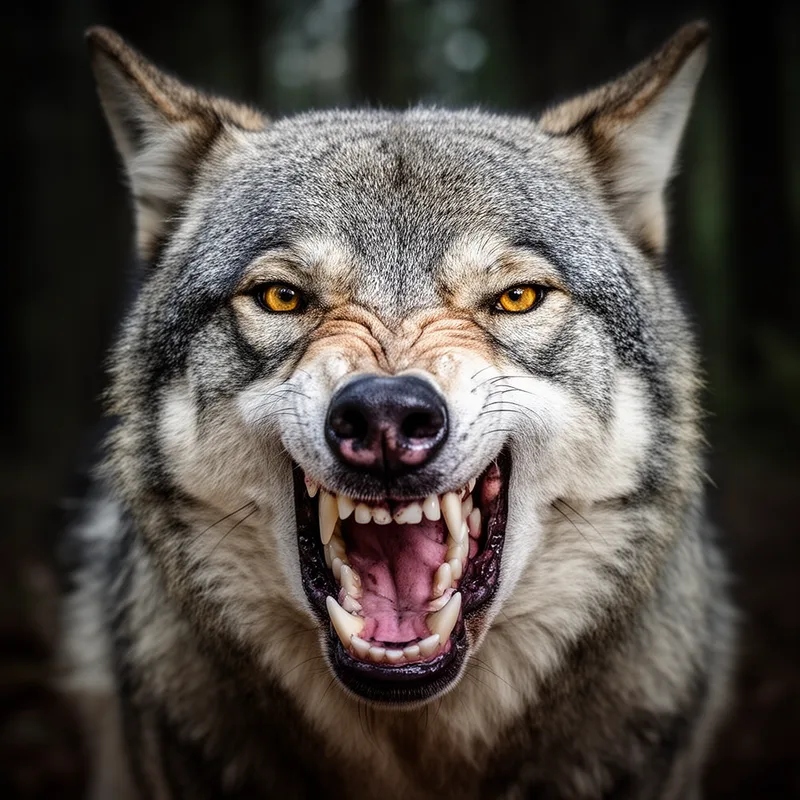
to snarl
 15
5.0
15
5.0

- verb
- /snɑrl/
- The raptor's head bursts through a panel behind them, leaping up at them, snarling and snapping.
- a dog snarled
Examples
-
As he approached the angry dog, it snarled loudly to warn him to stay away.
-
If you can get him to growl and snarl and spin his head around I'll give you a hundred bucks.
-
As if that sound were a cue, six more dogs scrambled, snarling, out of the door.
Fiction book (1990) -
We could definitely hear the feasting, snarling, growling, and fighting over the kill.
Academic text (1999) -
"The gods help you if I catch you in the open," Rikash snarled, flapping his wings.
Fiction book (1994) -
An enormous black dog snarled up at her, his lips drawn back to show large yellowed fangs.
Fiction book (1995) -
The dogs saw them first, running out, yapping, growling, snarling, their hair stiff and menacing.
Fiction book (1990) -
Suddenly, the baboon snarled, and Bokatu and Enkatai turned to locate the source of his anger.
Fiction book (1994) -
The dog began to snarl when it felt threatened by the stranger.
-
The lion snarled fiercely, showing its sharp teeth as a warning to intruders.
Synonyms


Antonyms

Phrasal Verbs


Compounds

How Threatening

Surface Forms
Etymology
Snarl as a verb likely began as people copying the rough sound animals make, a kind of 'growl'. That's why to snarl is to make a low, harsh sound showing anger or threat.