

slipperiness
 1
4.3
1
4.3

- noun
- /ˈslɪpərɪnəs/
- The slipperiness of the wet floor made it difficult to walk safely.
Examples
-
I really didn't think that the slipperiness would come into play this much, but it is.
-
The slipperiness of other solids is another matter.
Academic text (2005) -
She wiped one hand and then the other against her uniform, trying to remove the dangerous slipperiness.
Fiction book (1992) -
NIOSH and Liberty Mutual scientists used slip meters to examine the slipperiness of floor surfaces at study sites that were of concern to hospital safety staff.
Academic text (2006) -
Careful when you step outside; the slipperiness of the ice could cause you to fall.
-
The slipperiness of the mud after the rain made it hard for the hikers to maintain their footing.
Synonyms
 1
4.8
1
4.8
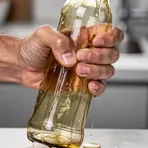
A smooth, slippery feeling on a surface that makes it hard to hold
Antonyms


How Slippery

Surface Forms
Morphology
Etymology
The word slipperiness comes from the simple verb slip, which means 'to slide by accident', plus the ending -ness that turns a word into a 'state' or 'quality'. So slipperiness is the 'quality' of being likely to make you slip, like a wet floor or smooth ice.