

slime bacteria
- noun
- /slaɪm bækˈtɪəriə/
- Specialized
- Slime bacteria are often found in damp soil where they help decompose organic matter.
Examples
-
Some slime bacteria can be beneficial to soil health.
-
Some slime bacteria produce fruiting bodies visible to the naked eye under certain conditions.
-
Scientists studied colonies of slime bacteria to understand their unique movement patterns.
-
The slime bacteria thrive in damp environments.
-
Slime bacteria are commonly found in decaying plant material, playing a vital role in the decomposition process.
-
In moist soil, colonies of slime bacteria help break down organic waste, enriching the soil.
-
Researchers discovered that slime bacteria can survive in extreme conditions, illustrating their adaptability.
Synonyms

Bacteria that make slimy groups and live in wet soil or rotting plants
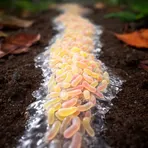
A tiny single-celled living thing that forms slimy groups in wet soil

A bacterium that makes slime and lives in wet soil

Tiny living cells that move smoothly over wet surfaces using slime, often in soil or decaying plants
Surface Forms
Morphology
The noun phrase denotes bacteria associated with or living in slime, a meaning directly and predictably composed from 'slime' (thick, sticky substance) + 'bacteria' (microorganisms). As a simple noun–noun compound following common compositional patterns found across languages, a B1 learner who knows both constituents can readily infer this meaning.
Etymology
The noun slime bacteria comes from the simple image of tiny bacteria living inside sticky slime, moving together in slimy blobs. So, the name means 'bacteria that live in slime and form groups'.

