
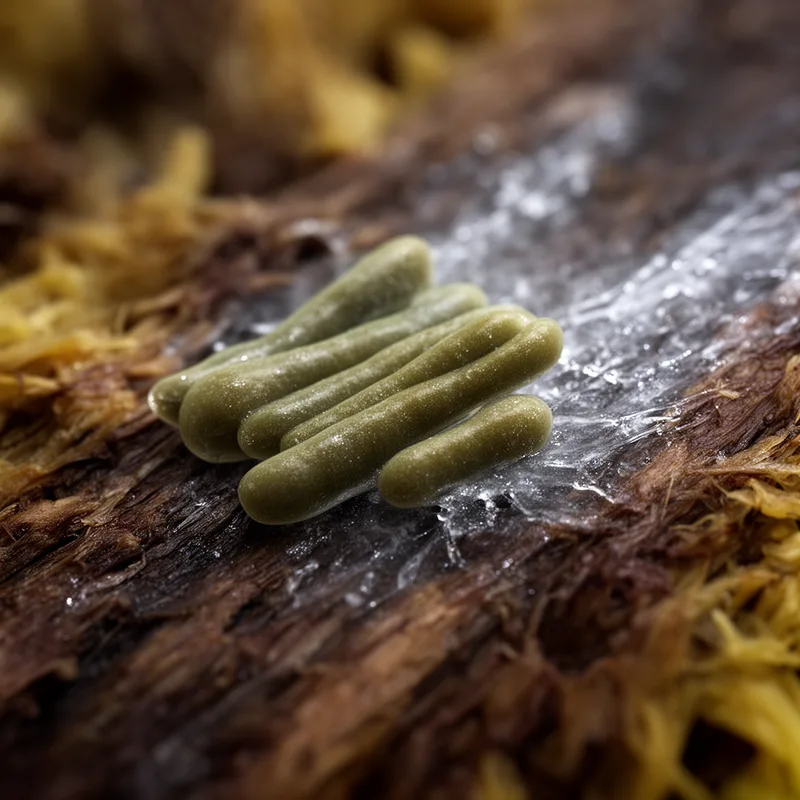
gliding bacteria
- noun
- Specialized
- Gliding bacteria secrete a slime that helps them move smoothly over wet surfaces.
Examples
-
The movement of gliding bacteria can be observed under a microscope in nutrient-rich environments.
-
Scientists discovered a new species of gliding bacteria in decaying wood samples.
-
The gliding bacteria thrive in moist environments.
-
Can you identify gliding bacteria in the soil?
-
Gliding bacteria move effortlessly across the surface of wet leaves, leaving a slimy trail behind.
-
In laboratory experiments, researchers found that gliding bacteria can colonize moist soil quickly.
-
The study focused on how gliding bacteria form colonies in decaying plant matter.
Synonyms
Bacteria that make slimy groups and live in wet soil or rotting plants

Tiny living things that form slimy colonies in damp soil or rotting plants
Surface Forms
Morphology
The phrase 'gliding bacteria' is directly derivable from 'glide' (to move smoothly along a surface) + 'bacteria' (single-celled organisms); it literally describes bacteria that move by gliding. This adjective+noun compositional pattern is straightforward and cross-linguistically common, so a B1 learner who knows both constituents will understand the meaning.
Etymology
Gliding bacteria comes from the simple image of tiny bacteria that glide along wet surfaces, using a thin layer of slime to slide smoothly. So, the name means 'bacteria that move by sliding over surfaces'.

