
sitzkrieg


 1
9.9
- noun
- /ˈzɪtsˌkriːg/
- Archaic
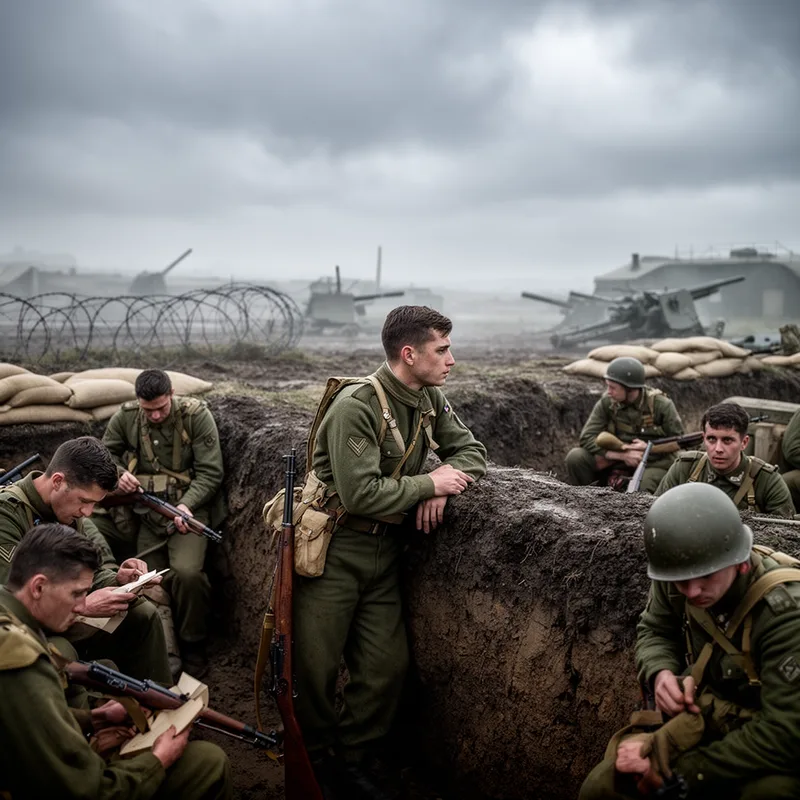
- The early months of World War II were known as the sitzkrieg because there was little actual combat.
Examples
-
Historians often refer to the period of waiting and preparation as a sitzkrieg.
-
During the sitzkrieg, soldiers spent months in their trenches with almost no fighting.
-
The sitzkrieg lasted for several months.
-
During the sitzkrieg, both sides prepared for the next phase of the war.
-
The negotiations entered a sitzkrieg, with both sides unwilling to make any concessions.
-
During the political campaign, the candidates experienced a sitzkrieg as they waited for the final debate.
-
The labor dispute turned into a sitzkrieg as workers and management stalled any progress toward an agreement.
Antonyms


How Active

Surface Forms
Etymology
Sitzkrieg comes from the German parts sitz ('sit') and krieg ('war'), giving the image of a 'sitting war' with almost no action. So it refers to a time in a war when there is little or no active fighting.