
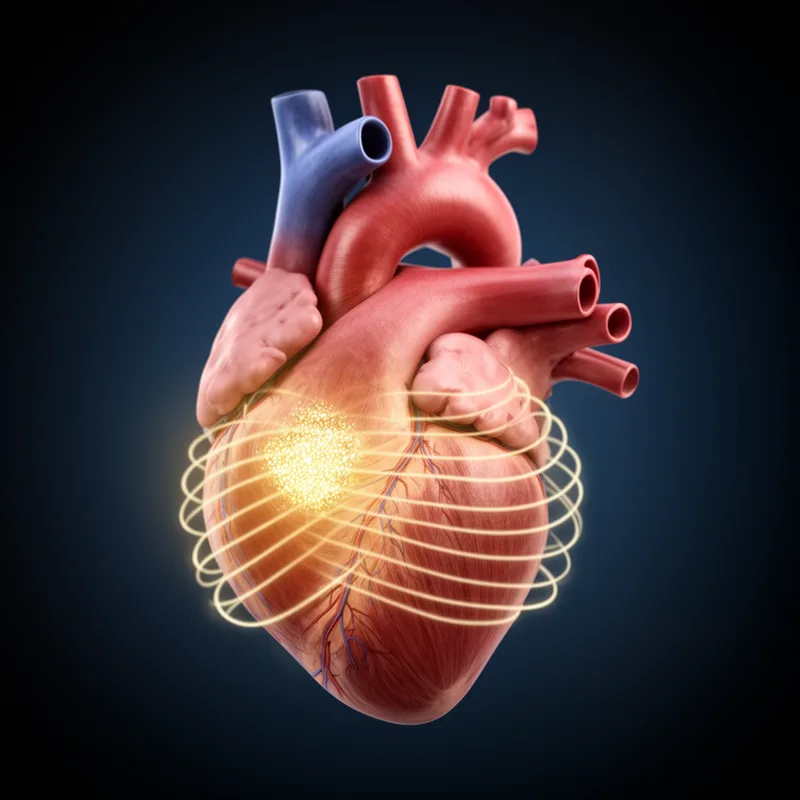
sinoatrial node
 1
5.8
1
5.8

- noun
- /ˌsaɪnoʊˈeɪtriəl noʊd/
- Specialized
- Doctors monitor the sinoatrial node to ensure it is functioning properly and maintaining a normal heart rate.
Examples
-
The sinoatrial node is responsible for initiating the heartbeat and regulating the heart's rhythm.
-
It begins in the sinoatrial node and spreads through the heart.
Academic text (2011) -
When the sinoatrial node sends an electrical signal, it prompts the heart to contract and pump blood.
Synonyms
 3
4.2
3
4.2
Cells in the heart that make electrical signals to control the heartbeat

 1
4.4
1
4.4
A small part of the heart that makes electrical signals to control the heartbeat

A small group of cells in the upper right part of the heart that starts and controls the heartbeat
Surface Forms
Morphology
The term transparently combines 'sinoatrial' (relating to the sinus/atrial region of the heart) and 'node' (a small mass or cluster), so a learner who knows both constituents can infer it denotes a small structure in the heart's atrial area. However, the specific specialised function as the natural pacemaker that initiates and regulates the heartbeat is technical medical knowledge not directly deducible from those parts, making the overall meaning only partly predictable.
Etymology
Sinoatrial node comes from parts that describe its place and shape: sino- means a small 'sinus' or cavity, atrial means the heart's upper chamber, and node means a small 'knot' or group. So the name fits: it is a small group of cells in the upper right part of the heart that acts as the heart's 'natural pacemaker' and starts the heartbeat.