
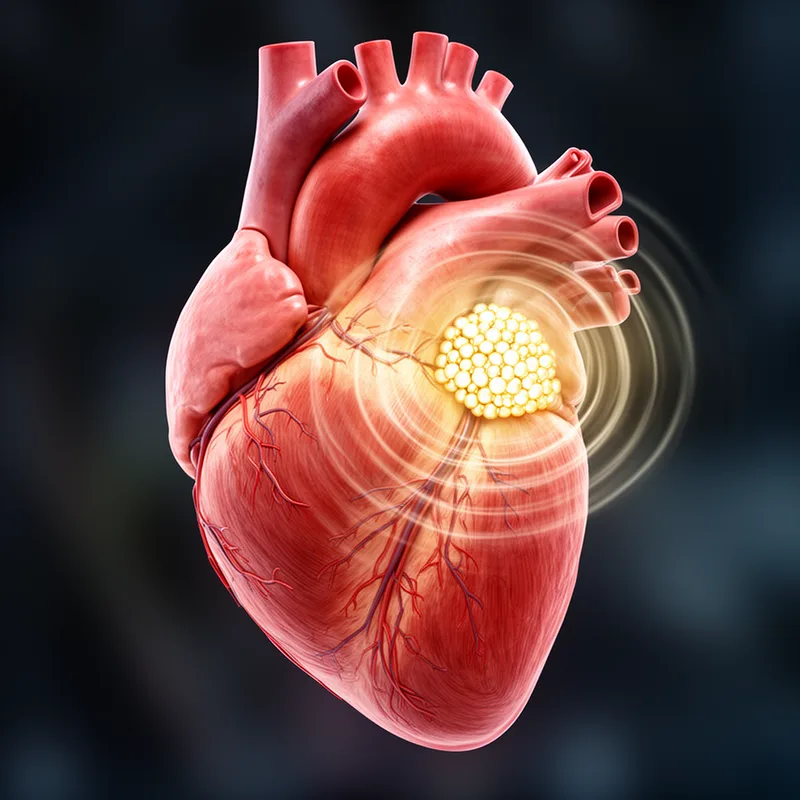
SA node
- noun
- /ˌɛsˈeɪ noʊd/
- Specialized
- The sino-atrial (SA) node—a group of cells in the right atrium—fires off a signal to initiate each new heartbeat and contract the atria.
Examples
-
When the ventricles are in diastole (relaxed), the SA node sends an electrical impulse to the atria, which causes the atria to contract and the ventricles to fill with more blood.
Academic text (2012) -
In AF, the normal electrical stimulus from the SA node is disrupted.
Academic text (2011) -
This area is supplied by the vagus nerve, which also supplies the SA node, facilitating ectopic electrical activity. AF in younger patients with normal heart structure is commonly paroxysmal rather than persistent.
Academic text (2011) -
The SA node is responsible for setting the rhythm of the heartbeat in the heart's right atrium.
-
If the SA node malfunctions, it can lead to irregular heartbeats or arrhythmias.
-
Doctors often monitor the activity of the SA node to ensure the heart is beating properly.
Synonyms

 3
4.2
3
4.2

Cells in the heart that make electrical signals to control the heartbeat
 1
5.8
1
5.8
A small group of cells in the heart's right upper chamber that makes the heartbeat regular

 1
4.4
1
4.4
A small part of the heart that makes electrical signals to control the heartbeat
Surface Forms
Morphology
SA + node
This is a specialized medical term where the first element 'SA' is an abbreviation (sinoatrial) not interpretable by a B1 learner and 'node' only signals a small anatomical mass. Knowing the constituent words would not allow a learner to infer the specific function of initiating and regulating the heartbeat, so the meaning is not compositionally derivable.
Etymology
SA node is a tiny group of cells in the top right part of the heart that sends regular signals like a small clock. The node is why doctors call it the heart's 'natural pacemaker' — it 'starts the heartbeat' and keeps the rhythm steady.