
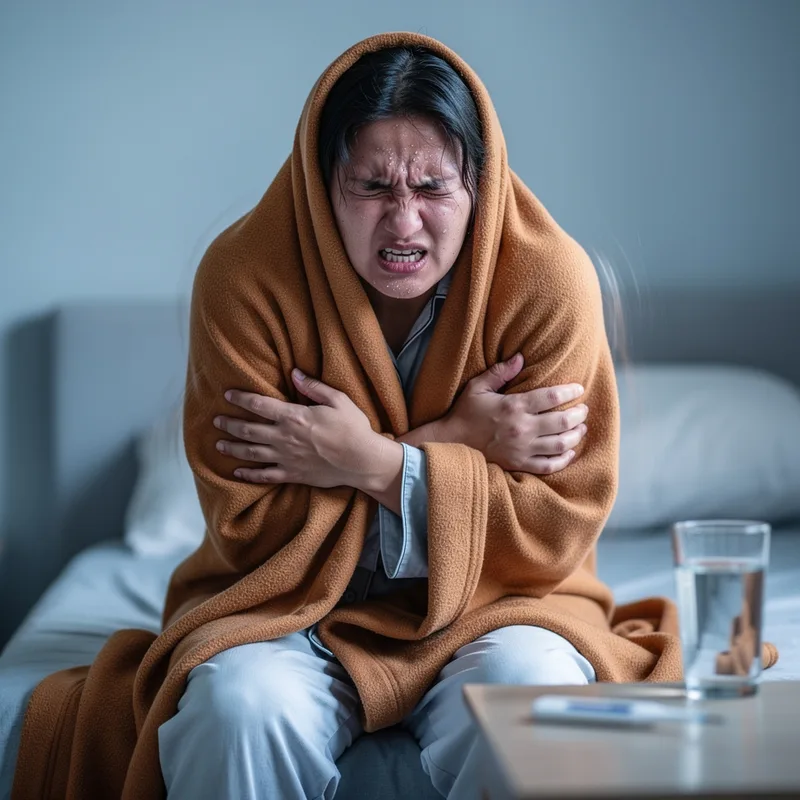
shivering
 1
2.7
1
2.7

- noun
- /ˈʃɪvərɪŋ/
- Blinking when light is bright, shivering with colds, these are all responses of the animal spirits and the nerves reacting to external stimuli.
Loading YouTube…
Watch on YouTubeBut when we measured this, we, we did see that the winter swimmers were shivering less or having less vigorous shivering when they said I'm cold.
- But when we measured this, we, we did see that the winter swimmers were shivering less or having less vigorous shivering when they said I'm cold.
- Blinking when light is bright, shivering with colds, these are all responses of the animal spirits and the nerves reacting to external stimuli.
Examples
-
But when we measured this, we, we did see that the winter swimmers were shivering less or having less vigorous shivering when they said I'm cold.
-
After being outside in the cold for too long, his shivering became more intense as he tried to warm up.
-
The patient's shivering indicated that he might have a fever that needed attention.
-
During the winter hike, we noticed a child shivering uncontrollably from the freezing temperatures.
Synonyms
 55
1.8
55
1.8
A small quick movement of the body or one of its parts
 52
1.8
52
1.8
A quick repeated movement back and forth or up and down that makes things tremble
 50
1.4
50
1.4
A sudden small shake of the body from cold, fear or excitement
 37
5.3
37
5.3
A shaking movement of the body or voice you cannot control
 23
2.7
23
2.7
A small shaking that you feel when you are very afraid or cold
 7
4.4
7
4.4
A slight, fast shaking that you can see or feel
 6
3.9
6
3.9
A small shaking movement in the voice often caused by fear or excitement
 2
5.1
2
5.1
Shaking strongly because of fear, cold, or strong emotion
 1
2.7
1
2.7
A small, quick shaking of the body when you feel afraid or cold
Antonyms


How Strong

Surface Forms
Morphology
Etymology
Shivering comes from the old English verb shiver, which meant 'to shake' or 'to break into small pieces'. So imagine your body breaking into many little shakes, and that image explains why shivering is the body's shaking often caused by cold or the start of a fever.