
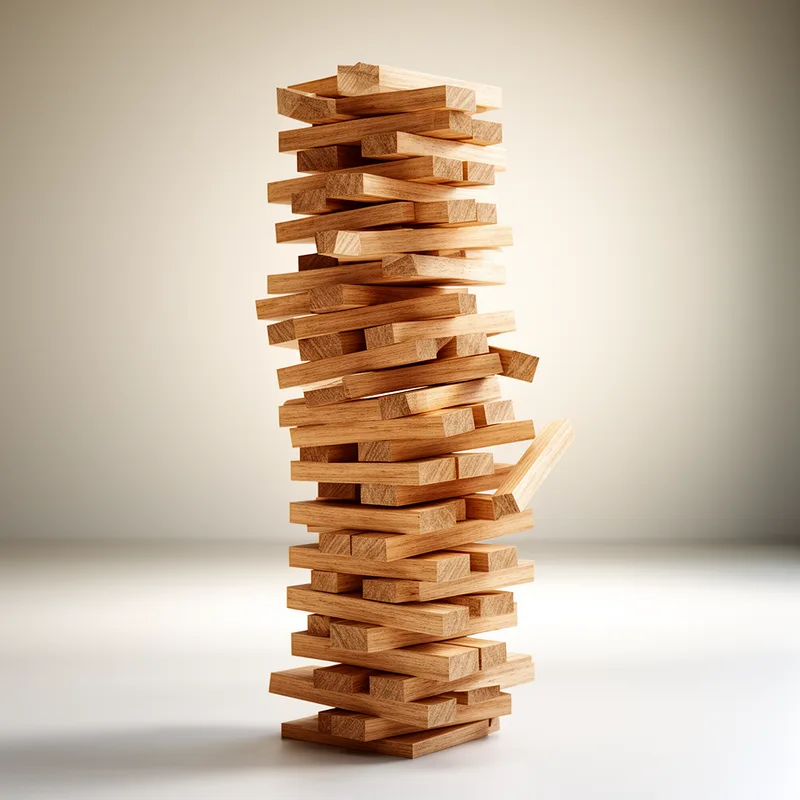
shaky
 53
3.3
53
3.3

- adjective
- /ˈʃeɪki/
- Honey, unless he has some vision of how to cut this thing... ...we're on very shaky ground.
- on shaky ground
- a shaky foundation
- look shaky
Loading YouTube…
Watch on YouTubeEven though you build a high tower with money IQ, the foundation is shaky, it's going to fall.
- Even though you build a high tower with money IQ, the foundation is shaky, it's going to fall.
- It was a little shaky start.
- But I think the evidence for the good genes hypothesis is starting to look shakier than initially.
- In the life sciences, we see research bubbles built on shaky evidence that no one wants to question.
- So it's too flaky, too flaky and shaky.
- You know, once you start going beyond the bounds of experience, things get really, really shaky.
- And in fact, in most jurisdictions, it's pretty shaky.
Examples
-
My sense of balance (like everything else) was a little shaky, like having an inner ear infection.
Fiction book (1998) -
The concern with cost was linked to the shaky financial ground of BAe's civil aircraft division.
Academic text (1996) -
I think the, the world is in a pretty shaky state at the moment.
-
The organization's kind of shaky right now.
-
In the life sciences, we see research bubbles built on shaky evidence that no one wants to question.
-
The scientific foundation of custody evaluations involving domestic violence is thus shaky at best.
Academic text (2016) -
Management shortcomings at some funds and shaky financial conditions in some host countries have produced disappointments.
Academic text (2001) -
The bridge felt shaky during the storm, making me worry about its safety.
-
Her confidence was shaky after receiving negative feedback on her project.
-
The economy is shaky right now, with many businesses struggling to stay afloat.
Synonyms
 80
4.4
80
4.4
Not steady and likely to change, fail, or fall
 47
7.6
47
7.6
In a dangerous, unstable position likely to fall or fail
 36
3.6
36
3.6
Unsteady and likely to move from side to side
 25
3.8
25
3.8
Thin and not strong so it breaks or tears easily
 18
5.9
18
5.9
Unstable and likely to fall, like an old chair or bridge
 16
3.3
16
3.3
Not firm or balanced and likely to fall
 10
4.3
10
4.3
Not safe because it might fail or break
 6
7.7
6
7.7
Not steady or straight and likely to wobble


 1
8.4
1
8.4
Unsteady and shaky because of weakness or old age

Unstable and likely to fall or fail soon
Likely to wobble or break, like a weak chair
Antonyms


Compounds

How Stable

Surface Forms
Morphology
Etymology
Shaky comes from the verb shake meaning 'to move back and forth' and the ending -y meaning 'tending to', so calling a plan or situation shaky gives an image of something that could 'shake' apart. That's why a shaky business, alliance, or promise feels not firm or secure and may fail.