
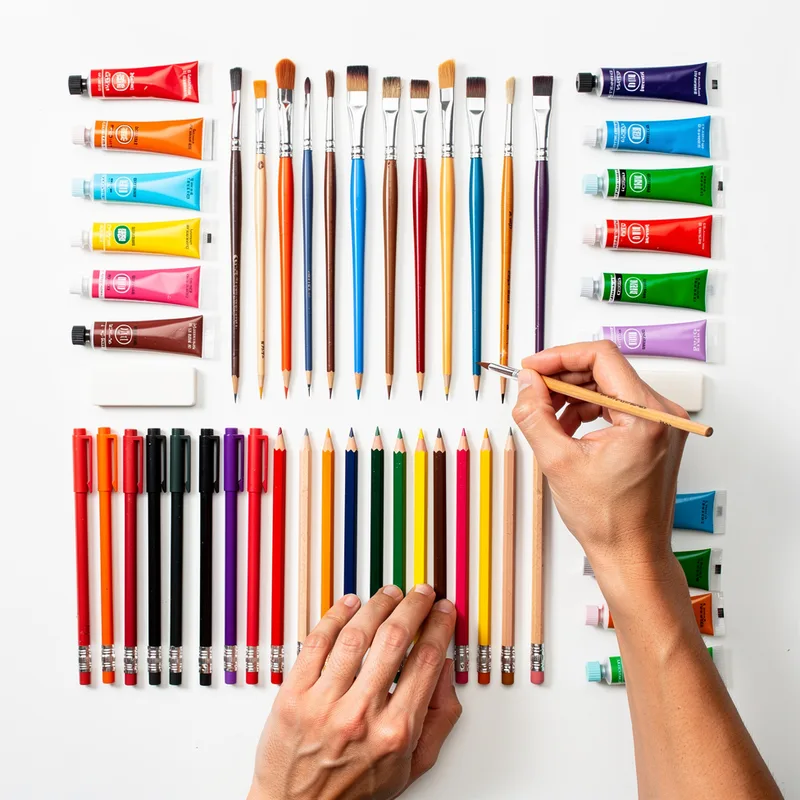
to set out
 51
3.2

- phrasal verb
- /sɛt aʊt/
- Beside it, I have laid a low table and set out silver candelabra, polished to a high shine.
- set out a framework
- set out more restrictive criteria
- set out standards
Loading YouTube…
Watch on YouTubeAnd that's a mandate to NHS England each year, which sets out the priorities for NHS England.
- And that's a mandate to NHS England each year, which sets out the priorities for NHS England.
- I can follow along with what the state has already set out, right.
- He has not only maps of all of Middle Earth set out that he has created himself.
- I don't think he has any particular policy and I think any attempts to get him to to set one out failed because he doesn't.
- So there's an internal order that is the internal governance system, and it's usually set out in a constitution or some agreements.
- So what Batson sets out is a three-step process that judge, trial judges have to apply.
- We drove round, not to the lunch place, but we drove round and there was a, a lovely marquee, small marquee set out and he said, come and have lunch.
- Basically is that that's how for me to set the to be fair, he's done a good thing in setting out a question to be answered straight away.
- So today I want to set out the big, bold, patriotic case for Britain to remain a member of the European Union.
Examples
-
The conservation plan will set out the roles and responsibilities of each partner.
Academic text (2012) -
So he starts off by setting out the dimensions that you had to take.
-
So let me just set out what we're going to prove.
-
New arrangements for managing public health are set out in the white paper.
Academic text (2011) -
In seeking to set out a basis for addressing these issues, I will focus on three questions.
-
All we can do is set out our stall of demands.
-
David is in the kitchen, setting out the roses in a vase.
Fiction book (1997) -
Alice opened her stall and set the books out in neat rows in front of her.
Fiction book (1993) -
And that's a mandate to NHS England each year, which sets out the priorities for NHS England.
-
For the party, we decided to set out the decorations on the table early in the morning.
Synonyms
 ∞
2.7
To assemble and prepare equipment or objects so they are ready to use
 194
1.6
Arrange people, things, and activities so they work well
 126
3.1
To arrange items so they are ready and easy to see
 112
1.7
To put things or information in a clear, neat order
 71
4.4
To arrange parts or ideas in a clear order
 69
4.5
To create and describe an idea, plan, or theory clearly
 45
3.7
Plan something carefully in detail before doing it
 36
4.2
To state something clearly in writing or speech
 17
1.0
To put things in a neat sequence
 15
3.6
To arrange text and images into a clear layout for printing or display
 13
3.9
To arrange things in an attractive, orderly way
 12
2.8
To put things into groups and into the right order
 2
4.2
To place things in a line along a path
 2
1.9
To put things in a line or in order


 1
8.0
To show something in a simple picture or plan
Antonyms


How Organized

Surface Forms
Morphology
The verb 'set' (to put/place) combined with the particle 'out' (outward, distributed) yields a clear compositional sense of placing or laying items outward—i.e., arranging or laying out objects; this is a regular motion/placement + particle pattern that B1 learners can readily infer. The extension to organizing ideas or information is a systematic metaphorical transfer from physical layout (common cross-linguistically), so the core meaning remains predictable from the parts.
Etymology
The phrasal verb set out also comes from the literal act of putting things 'out' on a surface: you set plates or tools out on a table so they are ready and in order. So, set out can mean 'to arrange or present things clearly'.