
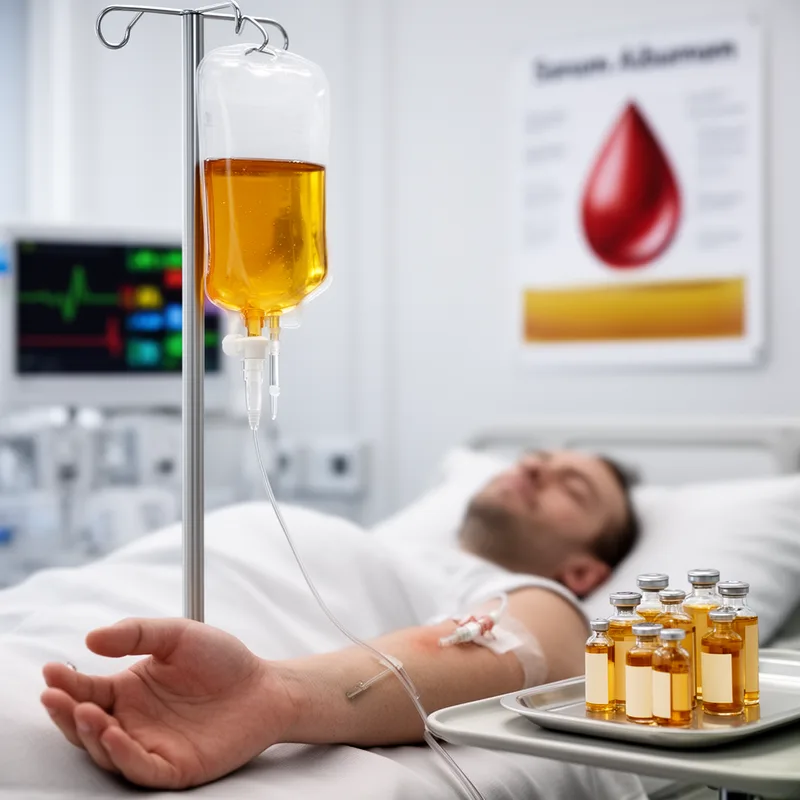
serum albumin
- noun
- /ˈsɪrəm ˈælbyʊmɪn/
- Specialized
- After the surgery, the patient received serum albumin through an infusion to aid in recovery.
Examples
-
The doctor decided to administer serum albumin to the patient to help restore protein levels in their blood.
-
In emergency medicine, serum albumin is often used to help increase blood volume after severe blood loss.
-
So probably the most common plasma expander is serum albumin, which is aside from hemoglobin and red blood cells.
Surface Forms
Morphology
The term is a straightforward noun phrase combining 'serum' (the liquid part of blood) and 'albumin' (a blood protein), so a learner who knows both words can infer it refers to the albumin found in serum or a serum-derived albumin product. While the clinical specifics (sterile infusion, plasma expander) are technical, the lexical composition is fully compositional and thus immediately comprehensible to a B1 learner.
Etymology
Serum albumin as a medicine is the same blood protein albumin taken from serum and made into a sterile liquid that doctors give by drip. Because this protein 'holds water in the blood', giving it helps 'restore blood volume' or 'replace lost protein' after surgery or injury.

