
seropositive
 1
7.5

- adjective
- /ˌsɪəroʊˈpɒzɪtɪv/
- Specialized
- In our experience, 85% of patients are IgG seropositive by the 3rd day and 100% by the 6th day.
- seropositive status
- seropositive patients
- HIV seropositive
Examples
-
The results are very encouraging and justify the recommendation of treatment for seropositive children as public health policy.
Academic text (1997) -
The findings highlight the importance of motherhood in shaping decisions to reveal or conceal knowledge of seropositive status.
Academic text (2010) -
To be eligible for the trial, children had to be seropositive by all three tests.
Academic text (1997) -
The association between comfort with seropositive status disclosure and compliance may be more telling.
Academic text (2012) -
Combined, male drug use is associated with nearly 90% of all HIV seropositive cases locally.
Academic text (1991) -
For many participants, disclosure to their mothers brought about their own acceptance of their seropositive status.
Academic text (2010) -
Screening all patients to exclude seropositive patients from treatment would be expensive.
Academic text (1992) -
However, several studies have shown that PTSD is associated with sexual HIV risk behaviors and HIV seropositive status.
Academic text (2011) -
Two studies have revealed an increased incidence of sinus infections in seropositive patients with advancing HIV disease.
Academic text (1998) -
To be eligible for the trial, children had to be seropositive by all three tests.
Antonyms

How Positive

Surface Forms
Morphology
Etymology
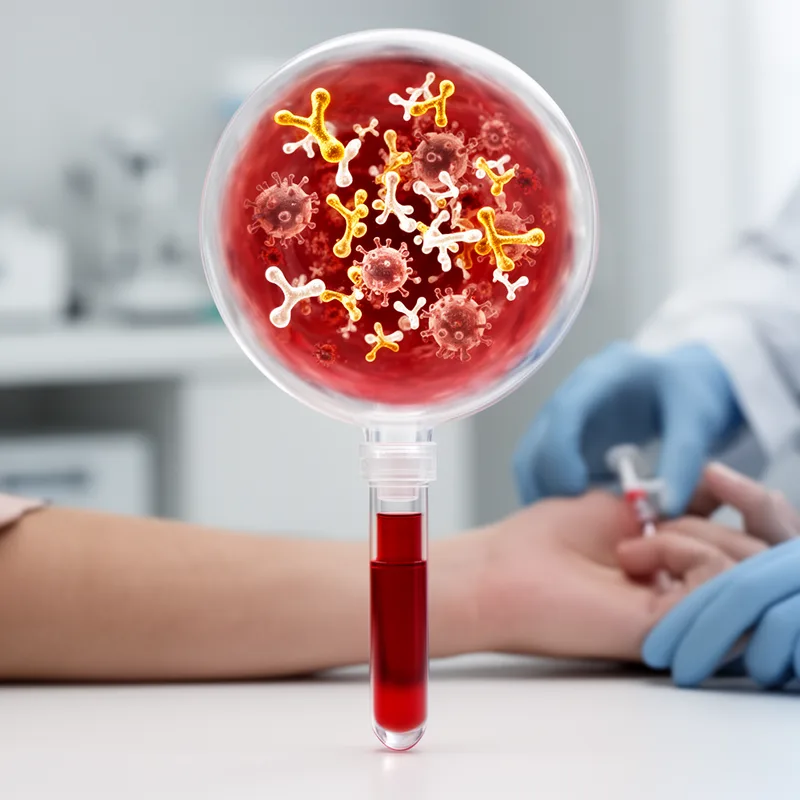
The word seropositive comes from sero- meaning 'serum', the clear liquid part of blood, and positive meaning 'showing' or 'present'. So a seropositive test is one where the blood 'shows' specific antibodies or signs of infection.