

equivocal
 6
7.6
6
7.6

- adjective
- /ɪˈkwɪvəkəl/
- The instructions were equivocal, leaving us unsure of what to do next.
- equivocal findings
- equivocal results
- equivocal nature
Loading YouTube…
Watch on YouTubeThere are many words that are equivocal in that sense.
- There are many words that are equivocal in that sense.
- So the law of the heart now has a kind of equivocal status, doesn't it?
- The research on this is equivocal at best and ridiculous at worst.
- The in the working Group One IPCC report that was released at last week, they were, they were a little equivocal about the warming since the pre industrial.
Examples
-
The research on this is equivocal at best and ridiculous at worst.
-
Yet Sullivan remains an elusive and equivocal figure in the history of American architecture.
Academic text (2012) -
With respect to college major, previous data remain equivocal depending on the specific style and major concerned.
Academic text (1994) -
If elected, however, these men of culture find themselves in an equivocal position.
Academic text (1990) -
However, the experimental research examining this issue is equivocal at the present time.
Academic text (1991) -
The majority of these studies have been clinically based, and their findings are largely equivocal.
Academic text (2012) -
However, the conclusions about the effects of SW-PBIS on increasing academic achievement remain equivocal.
Academic text (2013) -
However, subsequent research has revealed equivocal findings concerning the effectiveness of internal versus external imagery.
Academic text (1994) -
However, research findings are equivocal concerning the relationship between knowledge of AIDS and judgments of persons with AIDS.
Academic text (1996) -
As President of the University of Pennsylvania, Hackney had taken an equivocal position on "political correctness" controversies on his campus.
Academic text (1995)
Synonyms
 68
6.3
68
6.3
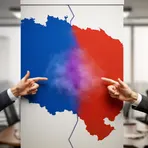
Not clear because it can have more than one meaning
 1
5.0
1
5.0
Not clearly defined so limits are unclear

Having several different voices or points of view
Antonyms




How Ambiguous

Surface Forms
Morphology
equivocal = equivocate (opaque) = equivoc + al
The adjective is formed by regular suffixation from the verb 'equivocate', and the adjectival meaning is directly related to the verb.
Etymology
Equivocal comes from Latin parts aequi- meaning 'equal' and voc- meaning 'voice', the same root you see in vocal. So, it originally meant 'equal voice', and today equivocal describes words or statements that can be read in more than one way, making them unclear or sometimes meant to mislead.