

sensory hair
- noun
- /ˈsɛn.sə.ri hɛr/
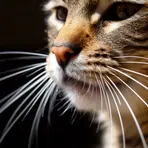
- The cat's sensory hair helped it navigate in the dark.
Examples
-
Rabbits have long sensory hairs on their faces.
-
The scientist studied the sensory hairs on a mouse's snout to learn how they detect movement.
-
Cats use their sensory hairs to judge whether they can fit through tight spaces.
-
Many mammals rely on sensory hair to navigate their environment in the dark.
-
The cat used its sensory hair to detect the movement of a nearby mouse.
-
Whiskers are a type of sensory hair that help dogs navigate their environment.
-
Many mammals rely on sensory hairs to sense changes in their surroundings.
Synonyms
 37
1.9
37
1.9

A long stiff hair on an animal's face that helps it feel things

A long stiff hair near an animal's nose that senses touch and air movement
How Sensitive

Surface Forms
Morphology
The meaning is directly derivable from combining 'sensory' (relating to sensation) with 'hair' (a filament); it denotes a hair-like structure used for sensing. This adjective+noun composition follows normal English semantics and is likely understandable to a B1 learner who knows both constituents.
Etymology
Sensory hair comes from the real whiskers on mammals: a long, stiff hair on the snout or brow that feels touch and air movement. Because these hairs help animals find things and move in the dark, the term now means a hair used 'to sense' the environment.