
seminiferous


 1
9.9
1
9.9
- adjective
- /ˌsɛmɪˈnɪfərəs/
- Specialized
 :
seminífero
:
seminífero
- Johnsen's score was used to categorize the spermatogenesis in 5 different places in the same histologic section in 20 seminiferous tubules. A score of 0 to 10 was given to each tubule according to epithelial maturation: 10: complete.
- seminiferous tubules
Examples
-
Once a sperm has matured, it is transported through the long seminiferous tubules and is stored in the epididymis of the testes until it is ready to leave the body.
Academic text (2015) -
The apoptotic index was defined as the number of apoptotic TUNEL-positive cells in 20 circular seminiferous tubule cross-sections per testis section.
Blog text (23) -
Lead induced apparent damage and reduction in the number, changes in shape and size of developing seminiferous tubules.
Academic text (2015) -
2.3.2. Measurement of Seminiferous Tubule Diameter
Blog text (23) -
In a testicular section from a patient with an SYCP3 mutation, the histological structure of the seminiferous epithelium is similar to that in the normal control.
Academic text (2003) -
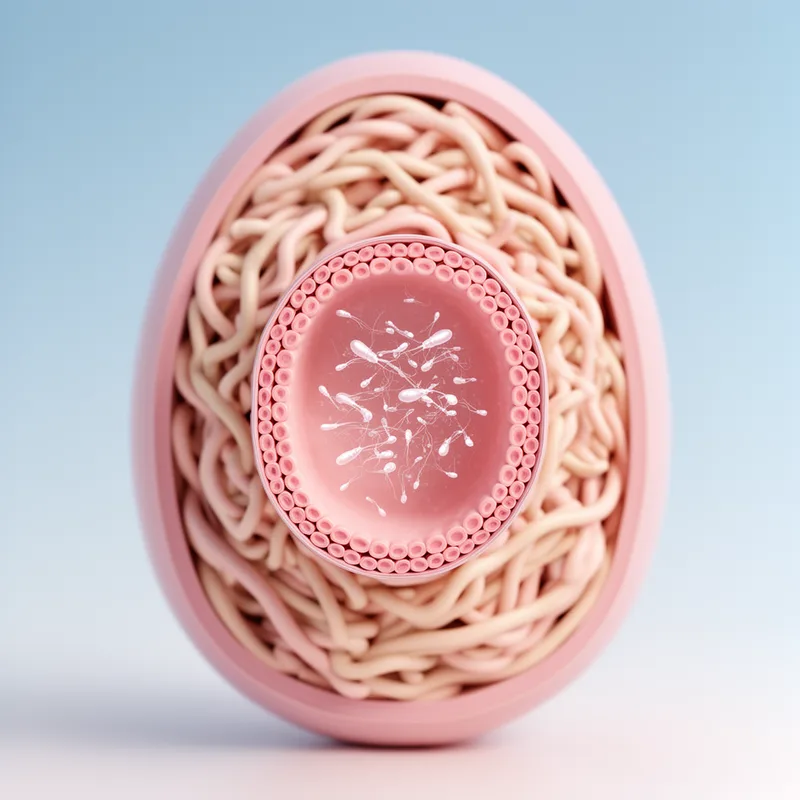
The testes are composed of numerous thin, tightly coiled tubules—the seminiferous tubules.
Academic text (2015) -
The seminiferous tubules in the testes are essential for the production of sperm.
-
Each seminiferous tubule plays a critical role in male fertility by generating and maturing sperm cells.
-
Researchers observed changes in the seminiferous tubules that impacted sperm development.
Synonyms
That helps the body make sperm cells
Antonyms

Compounds

- Specialized
1
7.9
A long twisted tube in the testicle where sperm grow and mature
Surface Forms
Etymology
The word seminiferous comes from the Latin semen, meaning 'seed', and the part -ferous, meaning 'bearing' or 'carrying', the same root as in transfer ('to carry'). So seminiferous is 'seed-bearing', which is why it describes the tubules in the testes that produce sperm.