
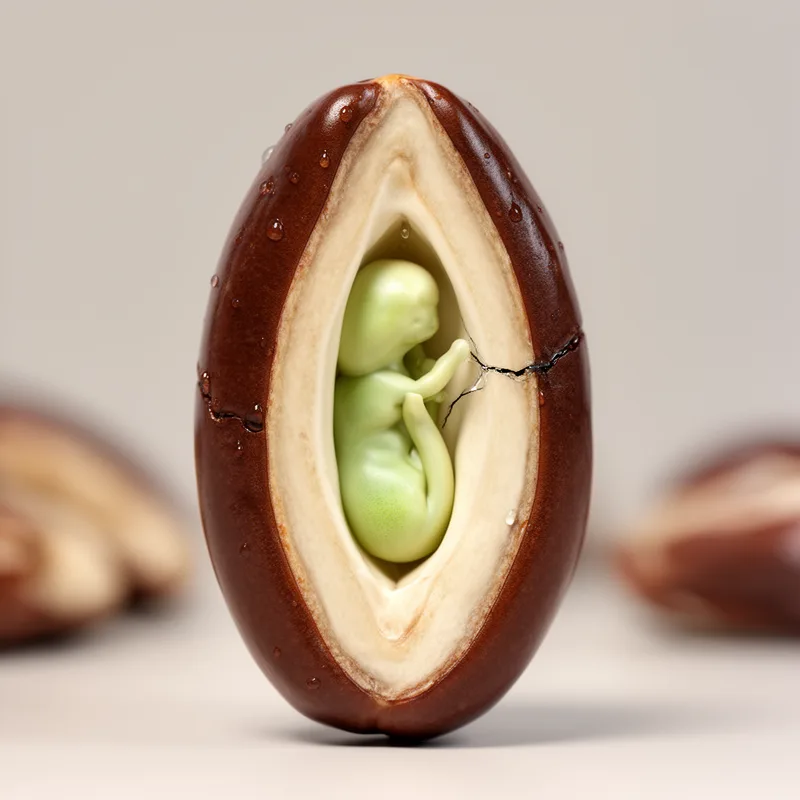
seed coat
- noun
- /siːd koʊt/
- Specialized
- Now, Agricultural Research Service food quality geneticist and plant breeder George L. Hosfield has found these flavonoids in bean seed coats, which is where bean colors are also found.
- a hard seed coat
Examples
-
The seed coat of the red kidney bean contains the color of the bean and is high in antioxidants.
Academic text (2000) -
"This whole process scarified the kernel and removed some of the aleurone layer, the black seed coat that is impervious to water," says Oelke.
Academic text (1998) -
But the the main thing about them is that they have a seed coat and then a simple embryo in there without any food reserves.
-
The Ojibway thresh the rice more, removing more of the dark seed coat, which makes the rice lighter and easier to cook.
Academic text (1998) -
It has a relative maturity of 4.3 and was developed from the cross between 'Essex' and PI438503A with a yellow seed coat.
Academic text (2015) -
The seed coat protects the embryo inside, ensuring it remains safe until germination.
-
After planting, the seed coat will eventually break open as the plant begins to grow.
-
A thick seed coat can help the seed survive harsh environmental conditions until it can sprout.
Synonyms
 4
4.2
4
4.2

The outer covering of a seed, nut, or fruit that you remove before eating
 1
9.9
1
9.9
A hard outer covering of a seed that protects it

The outer covering of a seed that protects the young plant inside
A thin layer that covers and protects a seed or an insect's front wing
Surface Forms
Morphology
The meaning 'protective outer covering of a seed' is directly and transparently derived from combining 'seed' (the plant part) with 'coat' (a covering or outer layer); the noun+noun composition clearly indicates a covering belonging to the seed. This is a common, compositional botanical term and follows cross-linguistic patterns, so a B1 learner who knows both constituents will readily understand it.
Etymology
The noun seed coat creates the image of a tiny coat for a seed: a hard outer layer that wraps the seed and 'protects' it from damage and keeps out water until the seed can grow. So the name means the outer covering of a seed that keeps the inside safe.