
secretory organ
- noun
- /ˈsɛkrɪˌtɔri ˈɔrɡən/
- Specialized
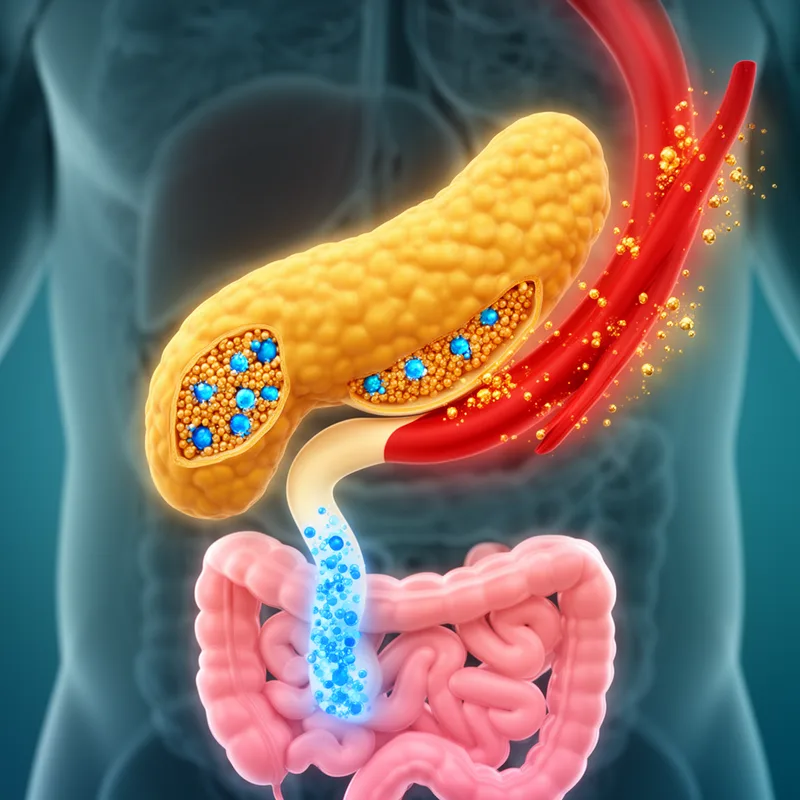
- The pancreas is a secretory organ responsible for producing important digestive enzymes.
Examples
-
The thyroid is a secretory organ that releases hormones essential for metabolism.
-
The doctor explained how each secretory organ has a unique function in maintaining health.
-
Damage to a secretory organ can disrupt the balance of hormones in the body.
-
The secretory organ produces hormones.
-
The pancreas is a vital secretory organ.
-
The pancreas is a secretory organ that plays a key role in regulating blood sugar levels.
-
Salivary glands are secretory organs that produce saliva to aid in digestion.
Synonyms

 108
3.5
108
3.5

A body part that makes and releases chemicals like hormones into the blood or through small tubes


 1
8.4
1
8.4
A gland that makes and releases substances such as hormones and enzymes into the blood or through tubes

A body part that makes liquid like sweat or saliva and sends it through a tube to a surface
Surface Forms
Morphology
The meaning 'an organ that produces and releases substances' is directly and transparently derived from combining 'secretory' (pertaining to the production of secretions) with 'organ' (a tissue-based internal part performing a function). This adjective + noun composition follows standard English morphology and has clear cross-linguistic parallels, so a B1 learner who knows the constituents can readily infer the meaning.
Etymology
Secretory organ gives a clear picture: secretory means it 'sends out' or 'releases' and organ means a body part. So a secretory organ is a body part that makes and releases substances like hormones or enzymes, which is why we use it for things like the pancreas or glands.