
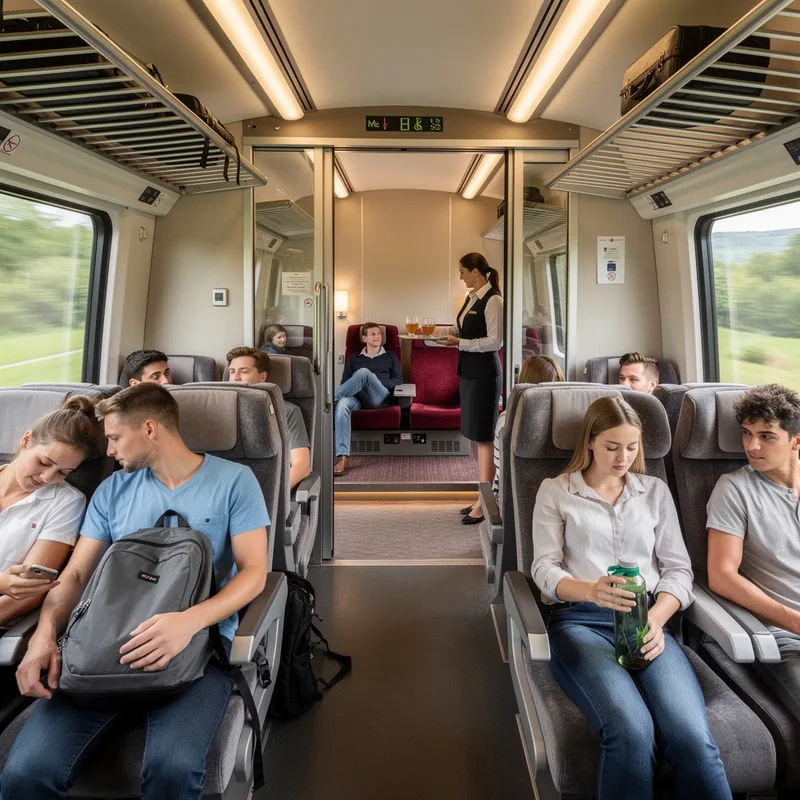
second class
 4
3.2
4
3.2

- noun
- /ˈsɛkənd klæs/
- The conductor was directing them toward the second-class Pullmans in the middle of the train.
- second-class passengers
Examples
-
A pregnant woman staggered in the crush, and Michael took her arm, got her up the steps, and swung himself into the second-class car as the train moved out.
Fiction book (1993) -
The ship had the capacity for 164 first-class passengers and 40 second-class passengers.
Academic text (2010) -
I'll take second class.
Fiction book (2002) -
Myers crossed into the second-class car.
Fiction book (1992) -
Today, late August and quite hot for the season, there was a man standing by the lowered window in the second-class car, trying to find a bit of air.
Fiction book (2000) -
He sat down in a second-class compartment with the basket in his lap.
Fiction book (1999) -
The train was so full that we had to book seats in second class instead of first class.
-
She preferred second class tickets because they were more affordable for her budget.
-
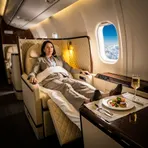
The second class section of the airplane was much less crowded than first class.
Synonyms
 3
2.0
3
2.0
The cheapest seats on a plane, train, or ship with basic services

A cheaper travel class on a ship, train, or plane than first class

The cheapest seats and rooms on planes, trains, and ships with few extras
Antonyms
How Comfortable

Surface Forms
Morphology
The meaning 'a lower or second-tier category' is directly derivable from combining 'second' (ordinal indicating the rank after first) with 'class' (a category or quality level). This ordinal + class composition is a regular, cross-linguistic pattern (e.g., Spanish 'segunda clase', French 'seconde classe') and follows standard English usage, so a B1 learner who knows the constituents will readily infer the MWE meaning.
Etymology
Second class in travel comes from old ships and trains that had first and second class areas. The second class area had cheaper seats and fewer services, so the phrase means the less expensive, less comfortable option.