

sea cradle
- noun
- Specialized
- The sea cradle clings to rocks in tidal pools.
Examples
-
While exploring the tide pools, we found a sea cradle attached to the rocks.
-
The sea cradle slowly grazed on algae on the submerged boulder.
-
Marine biologists study the sea cradle to understand mollusk evolution.
-
Many divers enjoy observing the sea cradle in its natural habitat.
-
Marine biologists study the sea cradle to understand mollusk evolution.
-
The sea cradle slowly grazed on algae on the submerged boulder.
-
While exploring the tide pools, we found a sea cradle attached to the rocks.
Synonyms
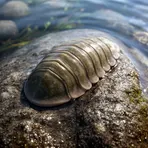
A sea animal with eight hard plates on its back that crawls on rocks

An animal that lives on rocks in the sea with a shell of eight hard plates
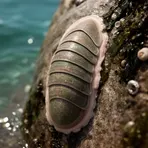
A sea animal with eight overlapping hard plates that clings to rocks
Surface Forms
Morphology
Knowing 'sea' (saltwater) and 'cradle' (a place of origin or a support) does not allow a B1 learner to infer a specific marine animal; the meaning 'a primitive mollusk (chiton)' is lexicalized and not compositionally derived from the parts. The second element does not denote an animal or obvious physical property, so the overall sense is unpredictable and opaque to learners.
Etymology
Sea cradle may come from the animal's shape: its flat body with overlapping plates looks like a tiny hard cradle resting on rocks in the sea. So the name came to mean 'a small shelled animal' you often find clinging to rocks.

