
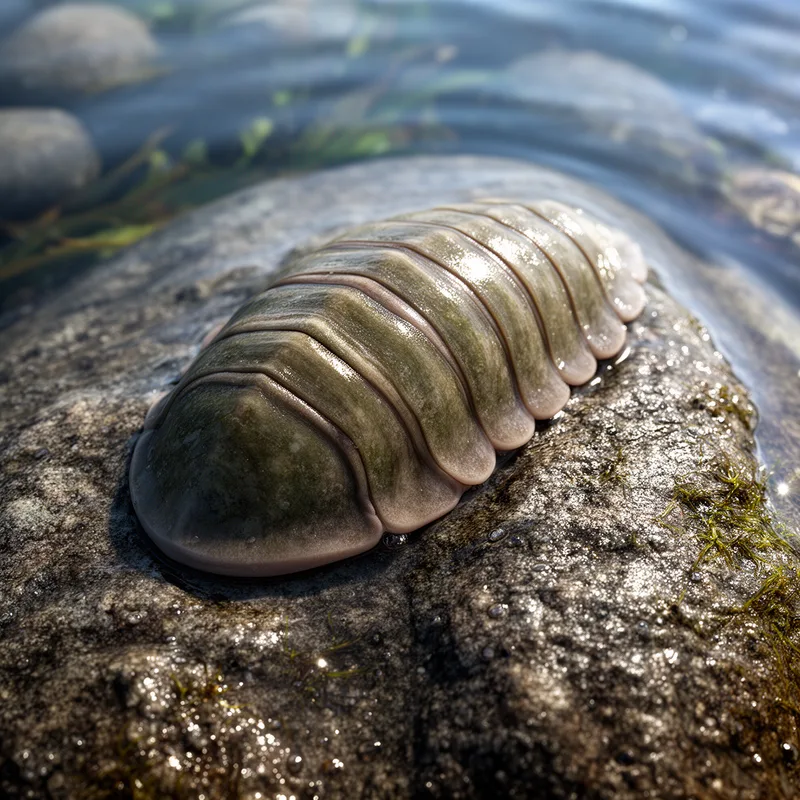
polyplacophore
- noun
- /ˌpɒliˈplækəˌfɔr/
- Specialized
- The shell of a polyplacophore is made up of eight distinct plates, allowing it to flex over rough surfaces.
Examples
-
The polyplacophore crawled slowly across the rocky tide pool, its plates gleaming under the water.
-
The polyplacophore clings tightly to rocks in the ocean.
-
Many biologists study the polyplacophore for clues about the evolution of mollusks.
-
Look at that polyplacophore on the rock!
-
The polyplacophore crawled slowly across the rocky tide pool, its plates gleaming under the water.
-
The shell of a polyplacophore is made up of eight distinct plates, allowing it to flex over rough surfaces.
-
Many biologists study the polyplacophore for clues about the evolution of mollusks.
Synonyms

An animal that lives on rocks in the sea with a shell of eight hard plates

A sea animal with a shell of eight hard plates that clings to rocks
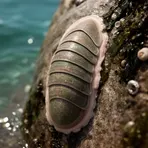
A sea animal with eight overlapping hard plates that clings to rocks
Surface Forms
Morphology
polyplacophore = poly + placo + phore
This is a learned zoological term built from classical combining forms, but an average B1 learner is unlikely to infer the meaning of a chiton from 'poly-', 'placo', and '-phore'.
Etymology
Polyplacophore comes from Greek parts poly- 'many', placo- 'plate', like a dinner plate, and -phore 'to carry'. So it literally means 'many-plate carrier', which helps you remember that this sea animal carries many plates on its back.

