
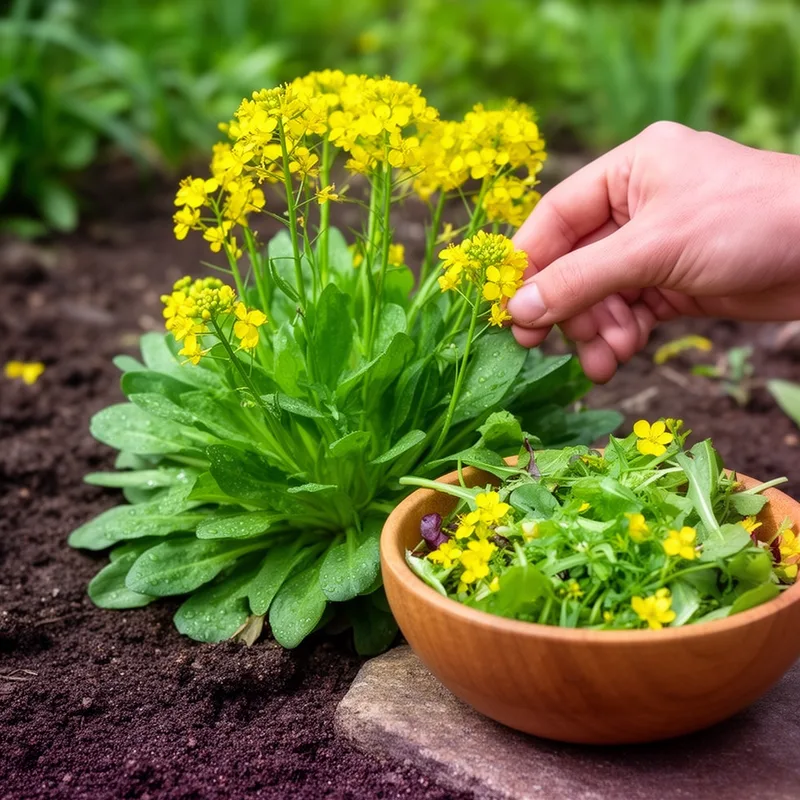
scurvy grass
- noun
- /ˈskɜrvi græs/
- UK
- Fresh scurvy grass can add a peppery flavor to winter salads.
Examples
-
Sailors once ate scurvy grass to ward off vitamin C deficiency on long voyages.
-
Many herbalists recommend scurvy grass for its high vitamin C content.
-
I added some scurvy grass to my salad for extra flavor.
-
Have you tried scurvy grass in your meals?
-
Fresh scurvy grass is often used in salads for its peppery flavor and high vitamin C content.
-
Many chefs incorporate scurvy grass into their dishes due to its rich vitamin C levels.
-
In the past, sailors consumed scurvy grass to prevent scurvy during long sea voyages.
Synonyms

A leafy plant grown for salad greens with a peppery taste
A leafy plant with yellow flowers eaten in winter salads

A small wild leafy plant called winter cress with yellow flowers often eaten in salads

A leafy plant with yellow flowers that people grow for spicy winter salads

A common wild plant with small yellow flowers that grows in fields and gardens
Surface Forms
Morphology
The compound combines 'scurvy' (vitamin C deficiency) with 'grass' (a plant), so its meaning as a plant associated with scurvy or used for vitamin C is directly inferable from the constituents. This modifier+head compounding pattern is common and transparent, so a B1 learner who knows both words would grasp the general idea even without botanical detail.
Etymology
Scurvy grass is a winter salad herb with yellow flowers that was named because people ate it for vitamin C to stop 'scurvy'. The words scurvy and grass show it was a plant used as food to prevent the disease.

