
Barbarea vulgaris
- noun
- Specialized
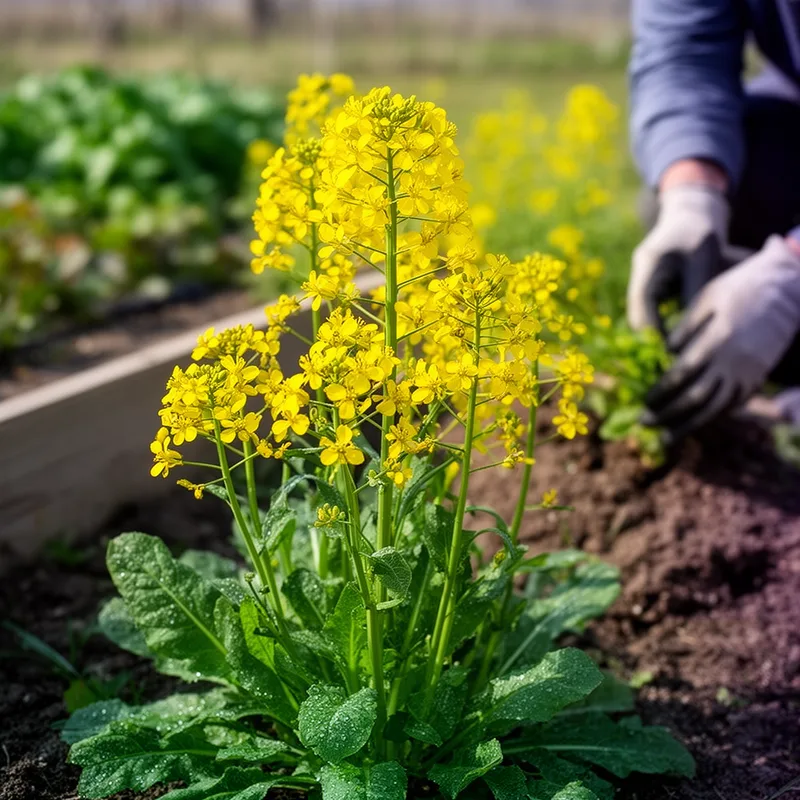
- Fields of Barbarea vulgaris bloom with bright yellow flowers in early spring.
Examples
-
Gardeners often remove Barbarea vulgaris because it spreads quickly as a weed.
-
The leaves of Barbarea vulgaris are sometimes eaten in salads or cooked as greens.
-
The garden was overrun with Barbarea vulgaris this spring.
-
Have you ever seen Barbarea vulgaris blooming in the wild?
-
Fields of Barbarea vulgaris bloom with bright yellow flowers in early spring.
-
Gardeners often remove Barbarea vulgaris because it spreads quickly as a weed.
-
The leaves of Barbarea vulgaris are sometimes eaten in salads or cooked as greens.
Synonyms

A harmful plant with bright yellow flowers that often grows where people do not want it
A weed with yellow flowers that often grows in fields and along roads

A leafy plant with yellow flowers eaten in winter salads

A leafy plant with yellow flowers that people grow for spicy winter salads
Surface Forms
Morphology
The binomial combines the genus name 'Barbarea' (winter cress) with the Latin epithet 'vulgaris' (meaning common/widespread), so a learner who knows both constituents can infer it refers to the common species of winter cress. Scientific naming is a regular, cross-linguistic pattern (genus + specific epithet), making the overall meaning transparently derivable from the parts.
Etymology
Barbarea vulgaris may come from the name 'Saint Barbara' for Barbarea and the Latin word vulgaris meaning 'common'. One popular story says people used the plant near Saint Barbara's day, so the name stuck. That's why the name helps you remember it is a common yellow-flowered plant often eaten or treated as a weed.

