
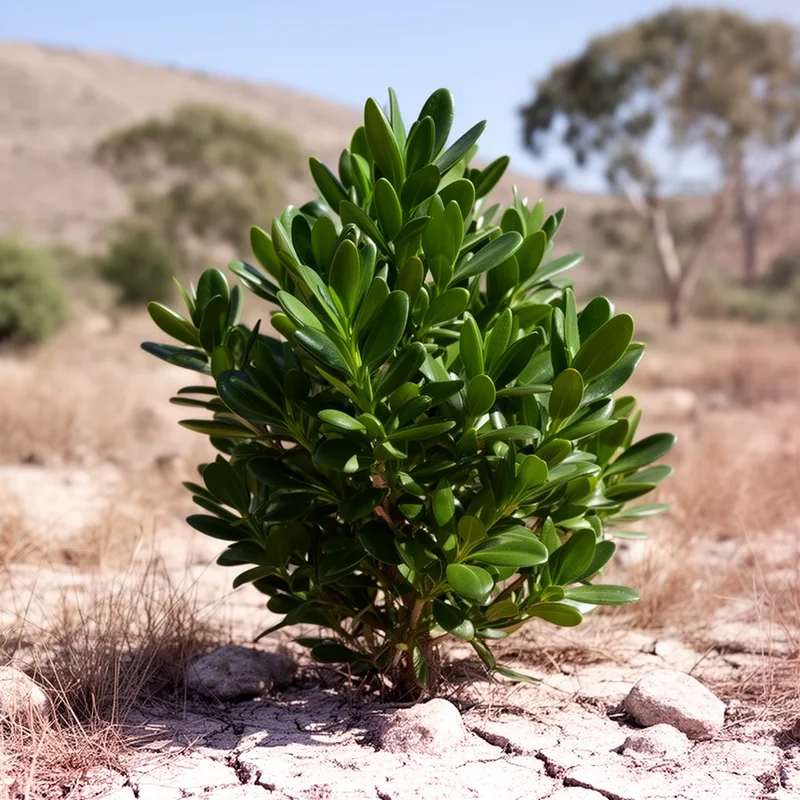
sclerophyllous
- adjective
- /ˌsklɛrəˈfɪləs/
- Specialized
- Eucalyptus trees are well known for their sclerophyllous leaves, which help them survive in dry climates.
- sclerophyllous evergreen
Examples
-
Many Mediterranean plants are sclerophyllous, allowing them to conserve water during hot summers.
-
The sclerophyllous nature of these shrubs makes them resistant to drought and grazing.
-
The sclerophyllous plants thrive in Australia.
-
Many sclerophyllous species can survive drought.
-
Eucalyptus trees are well known for their sclerophyllous leaves, which help them survive in dry climates.
-
Many Mediterranean plants are sclerophyllous, allowing them to conserve water during hot summers.
-
The sclerophyllous nature of these shrubs makes them resistant to drought and grazing.
Synonyms

Having thick, tough leaves like leather that help the plant keep water

Leaves that are thick, tough, and do not bend easily
Antonyms


How Leathery
- Specialized

 12
3.9
12
3.9
Surface Forms
Morphology
sclerophyllous = sclerophyll (opaque) = sclerophyll + ous
The adjective is a regular formation from the noun 'sclerophyll' using the productive suffix '-ous', meaning 'having or relating to sclerophyll'.
Etymology
The word sclerophyllous comes from Greek parts sclero- meaning 'hard' and -phyllous from phyllon meaning 'leaf', as in chlorophyll. So a sclerophyllous plant has 'hard' or thick leaves that help it save water and live in dry or poor soil.