

scarlet cup
- noun
- The forest floor was dotted with bright scarlet cups as the snow melted in March.
Examples
-
Botanists often spot scarlet cups early in spring before other fungi appear.
-
I found a scarlet cup in the garden.
-
A single scarlet cup caught the sunlight, drawing attention to its vivid color.
-
The bright scarlet cups were stunning this spring.
-
Walking through the forest, I spotted a bright red scarlet cup nestled among the fallen leaves.
-
During my hike, I was delighted to see several scarlet cups emerging from the damp earth in early spring.
-
In the woods, the small, cup-shaped scarlet cups added vibrant splashes of color against the green backdrop.
Synonyms

A small mushroom with bright red, cup-shaped bodies that appear in early spring

A small bright red mushroom with a cup-shaped body
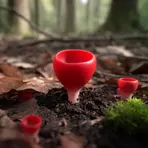
A small bright red mushroom with a cup-shaped body that grows in woods
Surface Forms
Morphology
The phrase 'scarlet cup' is a straightforward combination of 'scarlet' (bright red) and 'cup' (cup-shaped object), so its meaning as a small bright red, cup-shaped thing is directly derivable from the constituents. Color + shape noun compounds are cross-linguistically common and follow ordinary composition patterns, so a B1 learner who knows both words would readily infer the referent (here, a red cup-shaped fungus).
Etymology
Scarlet cup is the name of a small, bright red mushroom that looks like a tiny cup. The word scarlet shows its bright red color and cup describes its cup shape, so the name helps you remember this red, cup-shaped fungus that often appears in 'spring'.

