
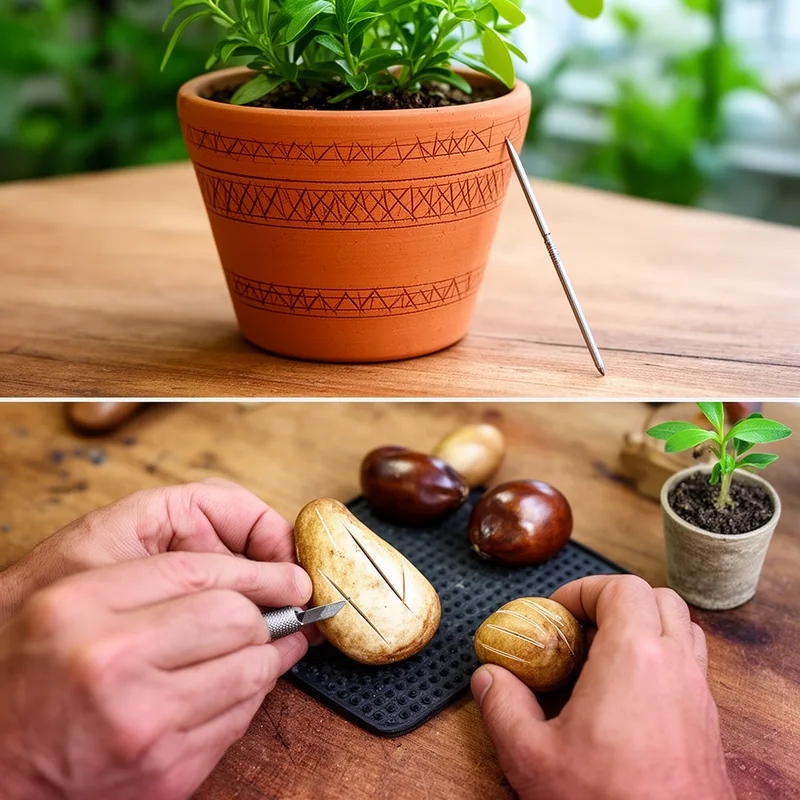
scarification
8.7
Making small cuts on seeds to help them grow or on surfaces for decoration
- noun
- /ˌskærɪfɪˈkeɪʃən/
:
escarificación
- The gardener used scarification techniques on the lawn to encourage new grass growth in the spring.
Examples
-
After the scarification of the tree bark, the botanist observed an increase in sap production.
-
Application requires scarification of the substrate by brush blasting followed by a thorough cleaning.
Academic text (1998) -
Those Ewa drawn from Eguadase were thus originally Igala and may be the source of the Ewa figures' "cat-whisker" marks, for those scarifications were found among the Igala.
Academic text (1997) -
Traditional scarification practices are often seen in tribal cultures as a form of body art.
Antonyms



How Deep

Surface Forms
scarification singular
scarifications plural
Morphology
Etymology
Scarification uses the root scar, which means 'cut or mark'. In gardening and plant care it means making small cuts or scratches on seeds, soil, or grass to help growth or improve the surface, so the origin shows why the word means making such cuts.