

salmon oil
- noun
- /ˈsælmən ɔɪl/
- Specialized
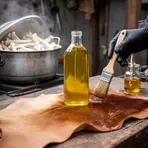
- She used salmon oil to treat the leather on her boots.
Examples
-
Many soap makers use salmon oil as a key ingredient.
-
The factory produced salmon oil as a byproduct during the canning process.
-
Salmon oil is sometimes added to soap for its conditioning properties.
-
The factory produces high-quality salmon oil for various industries.
-
Salmon oil is often used in the production of natural soap to enhance its moisturizing properties.
-
Many artisans prefer salmon oil for treating leather goods because it nourishes the material.
-
The factory produces a large quantity of salmon oil that is used in both soap making and leather conditioning.
Synonyms

A yellowish liquid from seal fat that people use to make soap, treat leather, and burn in lamps

An oil made from shark livers that people use as a health supplement and to soften leather

A yellow or brown fat from shark livers used to treat leather and give vitamin A
An oily liquid from heated animal bones used as a lubricant or to treat leather

A fatty oil from a small sea fish used to make paints, inks, and treat leather

Oil from sardines used to make soap or help machines move

An oil made from whale fat used long ago for lamps and soap

A cheap oil from cod used to treat leather and in factories, not for people to eat
Surface Forms
Morphology
The meaning 'oil obtained from salmon...' is directly and transparently derived from combining 'salmon' (a fish) with 'oil' (a liquid substance), following the common noun+noun pattern meaning 'oil from X'. This compositional naming pattern (e.g. 'fish oil', 'cod liver oil') is cross-linguistically common and would be readily understood by a B1 learner who knows the constituent words.
Etymology
Salmon oil comes from the old practice of pressing oil out of the leftover parts of salmon after they were cleaned and canned. That oily liquid was used to make soap and to soften leather, so the name now means the fatty oil used for 'soap making' and 'leather care'.

