

sainfoin
- noun
- /ˈseɪnˌfɔɪn/
- Specialized
- The sainfoin plant blooms with pale pink flowers, attracting various pollinators.
Examples
-
Damon Blue Butterfly feeds on Sainfoin and is shown with the white balance, exposure range, and saturation corrected in Photoshop.
Academic text (2006) -
Farmers often use sainfoin to improve soil quality and provide forage for livestock.
-
PHOTO (COLOR): Damon Blue Butterfly (Agrodiaetus damon) feeds on sole food source, sainfoin (Onobrychis viccifolia).
Academic text (2006) -
Many beekeepers cultivate sainfoin fields to produce high-quality honey during the summer months.
Synonyms
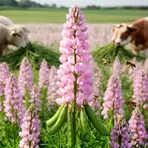
A perennial plant with pale pink flowers and curved pods that people grow for animal feed and bee nectar

A plant that lives for many years and is grown for animal feed and for bees

A plant with pale pink flowers that farmers grow for animal feed and to attract bees

A plant with pale pink flowers and curved pods grown for animal feed and honey

A small plant that lives for many years with pale pink pea flowers grown for animal feed and honey
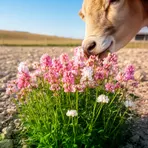
A plant like clover with small pink or white flowers that farmers use to feed animals
Surface Forms
Etymology
Sainfoin comes from old French parts sain and foin, meaning 'healthy' and 'hay'. It was called 'healthy hay' because farmers used it as good animal feed and bees love its flowers, so today sainfoin is grown for livestock food and for honey.

