

esparcet
- noun
- UK
- Honey produced from esparcet flowers is highly prized in some regions for its delicate flavor.
Examples
-
The botanist studied the adaptation of esparcet to chalk and limestone grasslands.
-
Farmers often grow esparcet to improve soil nitrogen and provide high-quality fodder for livestock.
-
The esparcet blooms beautifully in spring.
-
Farmers often cultivate esparcet for its high nutritional value.
-
The farmer decided to grow esparcet in his fields because it thrives in calcareous soils.
-
Many beekeepers favor esparcet for its attractive flowers that provide good forage for honeybees.
-
In traditional agriculture, esparcet is often planted alongside other forage crops to improve soil health.
Synonyms

A plant with pale pink flowers and curved pods grown for animal feed and honey
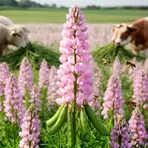
A perennial plant with pale pink flowers and curved pods that people grow for animal feed and bee nectar

A flowering plant that lives many years and farmers grow to feed animals and attract bees

A plant with pale pink flowers that farmers grow for animal feed and to attract bees

A plant that lives for many years and is grown for animal feed and for bees
Surface Forms
Etymology
Esparcet comes from French esparcette, a name for certain pea-family plants. A helpful way to remember it is to imagine a low, pale-pink 'pea' plant that farmers grow for animal food and for bees, so esparcet means a forage plant that gives good fodder and honey.

