

sagebrush mariposa tulip
- noun
- US
- The sagebrush mariposa tulip blooms in May, adding washes of pale purple to the grasslands.
Examples
-
We spotted a cluster of sagebrush mariposa tulips during our hike east of the Cascade Mountains.
-
Botanists consider the sagebrush mariposa tulip an indicator species for the region's dry hillsides.
-
The sagebrush mariposa tulip blooms in the spring.
-
Have you seen the sagebrush mariposa tulips in bloom?
-
The sagebrush mariposa tulip blooms in May, adding washes of pale purple to the grasslands.
-
We spotted a cluster of sagebrush mariposa tulips during our hike east of the Cascade Mountains.
-
Botanists consider the sagebrush mariposa tulip an indicator species for the region's dry hillsides.
Synonyms
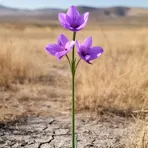
A North American wildflower with one to three lilac flowers on a tall stem that grows in dry areas
Surface Forms
Morphology
This is a compositional compound noun: the head 'tulip' (a flower) is specified by the modifiers 'mariposa' (a type of flowering plant) and 'sagebrush' (habitat/association), so a learner who knows the three words can infer it is a kind of tulip related to mariposa lilies and associated with sagebrush areas. There is no idiomatic or metaphorical shift — the meaning is built from the constituents following normal noun-modifier composition, making it transparent to learners who know the parts.
Etymology
Sagebrush mariposa tulip paints a picture of a pale, butterfly-like lily called a mariposa tulip growing among low sagebrush on dry hills. Because it appears in those dry places, people use it as an 'indicator' that the land is dry.

