
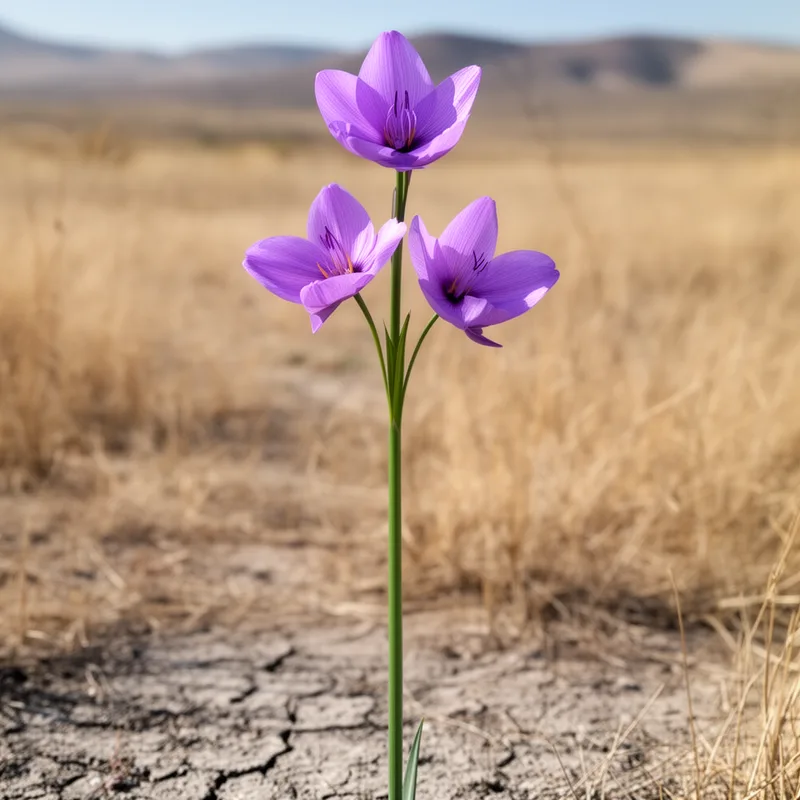
Calochortus macrocarpus
- noun
- Specialized
- Gardeners admire Calochortus macrocarpus for its striking lilac blooms and ease of cultivation in arid climates.
Examples
-
Calochortus macrocarpus can be found in the dry hills and grasslands of eastern Oregon.
-
The delicate flowers of Calochortus macrocarpus appear from late spring to early summer.
-
The Calochortus macrocarpus blooms beautifully in the spring.
-
Have you seen a Calochortus macrocarpus in the wild?
-
Calochortus macrocarpus thrives in the arid landscapes of eastern Washington, showcasing its lovely lilac flowers.
-
During the summer, the Calochortus macrocarpus flowers create a vibrant display in the dry meadows.
-
Many botanists study Calochortus macrocarpus due to its adaptability to harsh dry environments.
Synonyms
A wild flower with one to three pale purple flowers on tall stems in dry hills
Surface Forms
Morphology
Calochortus + macrocarpus
This is a Linnaean binomial: combining the genus name 'Calochortus' with a species epithet. A learner who knows the genus can infer it names a particular Calochortus (a type of lily), but the specific descriptive content of 'macrocarpus' (a Latin epithet not glossed here) is not transparently understandable to an average B1 learner, so the full meaning is only partially recoverable.
Etymology
Calochortus macrocarpus comes from Greek words: kalos meaning 'beautiful', karpos meaning 'fruit', and macro- meaning 'large'. So the name creates a clear image of a pretty, grass-like lily with large seed pods, which fits this mariposa lily with lilac flowers found in dry hills.

