
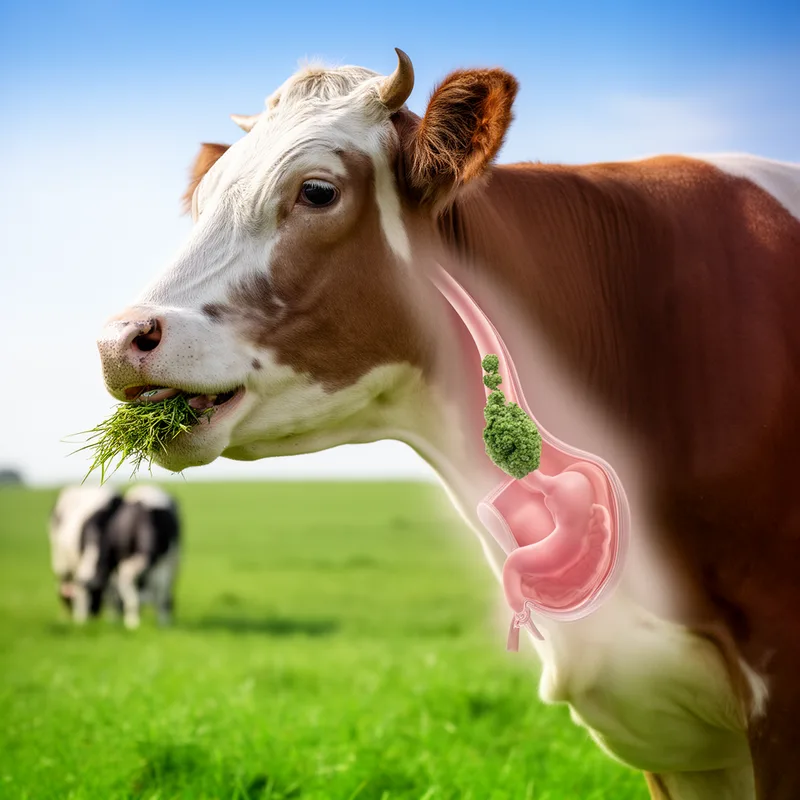
to ruminate
 1
8.0
1
8.0

- verb
- /ˈruːməˌneɪt/
- Specialized
- He was ruminating.
- a cow ruminates
Loading YouTube…
Watch on YouTubeNow, when we say ruminating, we're talking about something that we human beings don't typically do with our food.
- Now, when we say ruminating, we're talking about something that we human beings don't typically do with our food.
Examples
-
Pete could feel the slow breath of the hard house around them, the ticking radiators and ruminating clocks.
Fiction book (1995) -
Wooster ruminates; his jaw moves from side to side, as if he has learned to chew like one of his cows.
Fiction book (1997) -
Now, when we say ruminating, we're talking about something that we human beings don't typically do with our food.
-
We now sit and ruminate over the cud we spit out, upbraiding everybody else for our failings.
Blog text (4) -
It results in nitrate poison in cattle, blue tongue in sheep, and will bloat any ruminating animal.
Blog text (14) -
They know not the meaning of yesterday or today; they graze and ruminate, move or rest, from morning to night, from day to day, taken up with their little loves and hates and the mercy of the moment, feeling neither melancholy nor satiety.
Academic text (2007) -
A main factor in this respect is certainly the lower proportion of effective fiber, which is a main stimulus for cows to ruminate (Mertens, 1997), and thus to reduce the particle size and increase the surface area of the forages.
Academic text (2015) -
As the afternoon sun warmed the field, the cows ruminated on the grass, chewing their cud contentedly.
-
The sheep sat peacefully on the hill, ruminating while their shepherd watched nearby.
-
In the quiet pasture, the goats ruminated on their food, savoring every bite under the shade of a tree.
Synonyms
 5
7.7
5
7.7
To bring food or liquid from the stomach back into the mouth
 2
7.9
2
7.9
To chew food by biting and grinding it with the teeth

To chew food with the teeth
Surface Forms
Morphology
ruminate = rumen (opaque) = rumin + ate
The verb is formed from the Latin combining form rumin- + the verb-forming suffix -ate, but these are not productive or familiar English morphemes for a typical B1 learner, so the meaning is not easily derivable from known parts.
Etymology
Ruminate comes from the Latin ruminare, which meant 'to chew the cud', what cows and sheep do when they bring up food and chew it again. So, for animals, to ruminate is to chew their food a second time.