
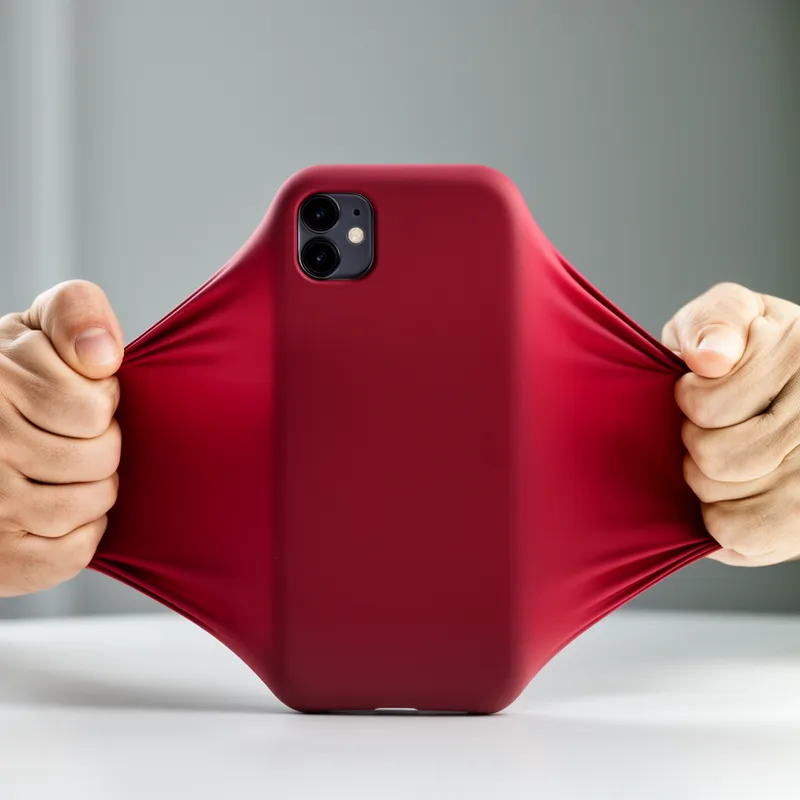
rubberlike
- adjective
- /ˈrʌbərˌlaɪk/
- The artist used a rubberlike substance to create sculptures that can bend and flex.
Examples
-
Her new phone case is rubberlike, making it easy to grip and highly durable.
-
It was easy enough to find because the book was thin and had a rubberlike texture.
Fiction book (1998) -
Instead of the traditional clay field with raised bases and unlevel grass, the new field will be made of a rubberlike material for both the grass and field.
Blog text (31) -
The toy is made of a rubberlike material that allows it to stretch without breaking.
Synonyms

 31
3.4
31
3.4

Able to bend easily without breaking and return to shape
 23
2.6
23
2.6
Able to return to its original shape after being stretched or pressed
 12
3.9
12
3.9
Feels tough but flexible like animal skin
 3
3.3
3
3.3
Flexible and bouncy when you bend or squeeze it


 1
9.9
1
9.9
Thick and tough like leather

Having a tough, smooth, flexible feel like animal skin used for bags and jackets
Antonyms

How Elastic

Surface Forms
Morphology
Etymology
Rubberlike comes from rubber, the stretchy, bouncy material, plus the ending -like which means 'similar to'. So something rubberlike is 'like rubber' — it stretches or bends without breaking.