
rotenone


 1
9.6
- noun
- /ˈroʊtəˌnoʊn/
- Specialized
- In this article, we dispel common misconceptions about the environmental effects of small-scale rotenone sampling in marine research.
- rotenone kills fish
- rotenone sampling
- rotenone disperses
Examples
-
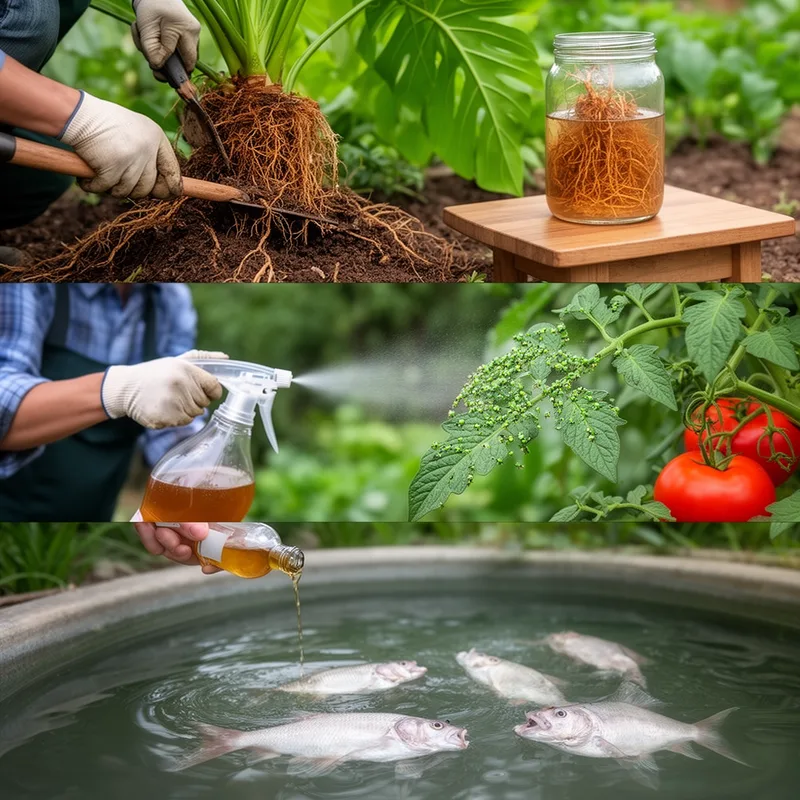
In some regions, rotenone is favored for fishing because it effectively catches fish without causing harm to mammals.
-
Farmers apply rotenone to control insect infestations, taking advantage of its low toxicity to humans and pets.
-
Sampling from small rotenone stations in open water does not kill all fish in the area.
Academic text (2008) -
The potential for rotenone to bioaccumulate through food chains is low; rotenone has a half-life of about a day in fish.
Academic text (2008) -
In summary, these sources regard rotenone as a relatively safe pesticide for use in agriculture and animal husbandry.
Academic text (2008) -
In various other field studies of reef fishes that employed typical small rotenone stations, no adverse effects were observed on corals.
Academic text (2008) -
There are no reported effects on human consumers of fish collected using rotenone, and both authors have consumed fish collected in this way without noticeable immediate effects.
Academic text (2008) -
Shore fish populations recover rapidly from short-term natural disasters and from the much more localized effects of rotenone sampling.
Academic text (2008) -
Many mobile fishes avoid rotenone and leave the treated area temporarily until the rotenone has dispersed, although small groupers are attracted to collecting sites to prey on disoriented fishes.
Academic text (2008) -
Gardeners often use rotenone as a natural insecticide to protect their plants from pests.
Surface Forms
Morphology
rotenone = roten + one
The word is a specialized chemical name: although it contains the chemical suffix '-one', the stem 'roten' is not a productive English base learners can use to infer meaning without specialist knowledge.
Etymology
Rotenone comes from a local name roten for the plant 'roots' where it was first found, plus the chemical ending -one that marks many chemicals. So it is the chemical from those roots, which helps you remember why rotenone is used as a natural insect and fish poison in gardens.