
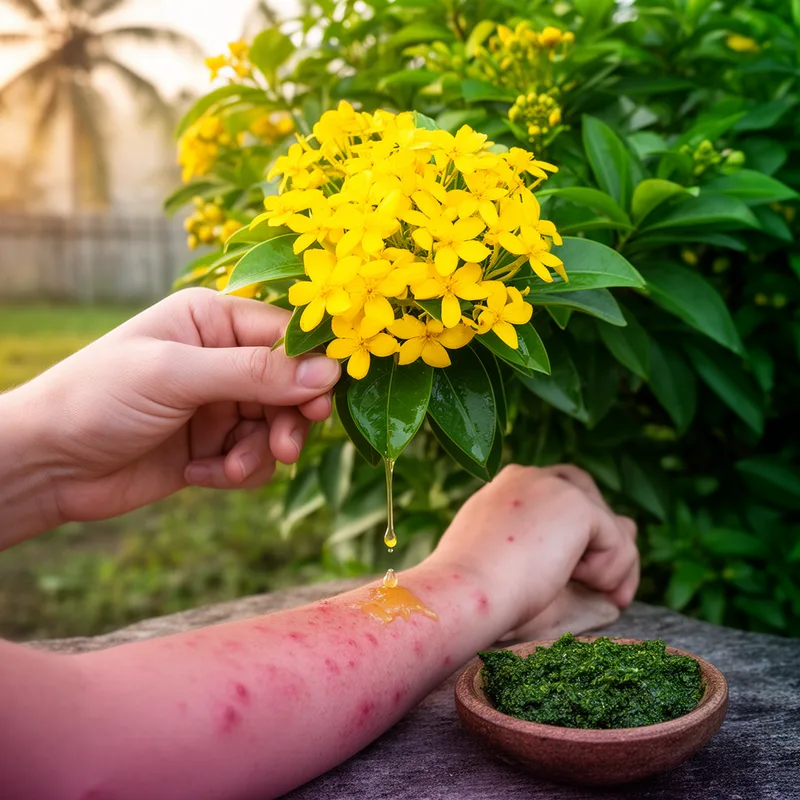
ringworm shrub
- noun
- /ˈrɪŋˌwɜrm ʃrʌb/
- US
- We planted a ringworm shrub in our garden for its medicinal properties and bright yellow flowers.
Examples
-
The juice of the ringworm shrub is traditionally used to treat skin infections in rural communities.
-
The herbalist recommended using leaves from the ringworm shrub to make a paste for rashes.
-
The ringworm shrub is known for its medicinal properties.
-
I found a ringworm shrub in my garden.
-
The herbalist recommended using leaves from the ringworm shrub to make a paste for rashes.
-
The juice of the ringworm shrub is traditionally used to treat skin infections in rural communities.
-
We planted a ringworm shrub in our garden for its medicinal properties and bright yellow flowers.
Synonyms
A tropical shrub with bright yellow flowers and leaves people use to treat skin infections

A tropical bush with yellow flowers whose leaves are used to treat skin infections and bites

A tropical shrub with large leaves and yellow flowers whose juice people use to treat skin infections and poisonous bites

A tropical shrub with yellow flowers and large leaves whose juice treats skin infections and poisonous bites
Surface Forms
Morphology
This is a straightforward noun+noun composition where the modifier 'ringworm' identifies the shrub's association or use related to ringworm; an intermediate-level learner who knows both words can infer it is a plant connected to that condition (most likely used for treatment). There is no idiomatic or highly metaphorical shift in meaning, so the sense is compositional and predictable from the constituents.
Etymology
Ringworm shrub got its name because people used the shrub's juice to treat the skin disease called 'ringworm' and to soothe poisonous bites, so the plant was known for that healing use. So the name simply points to its traditional role as a medicine for skin problems.

