
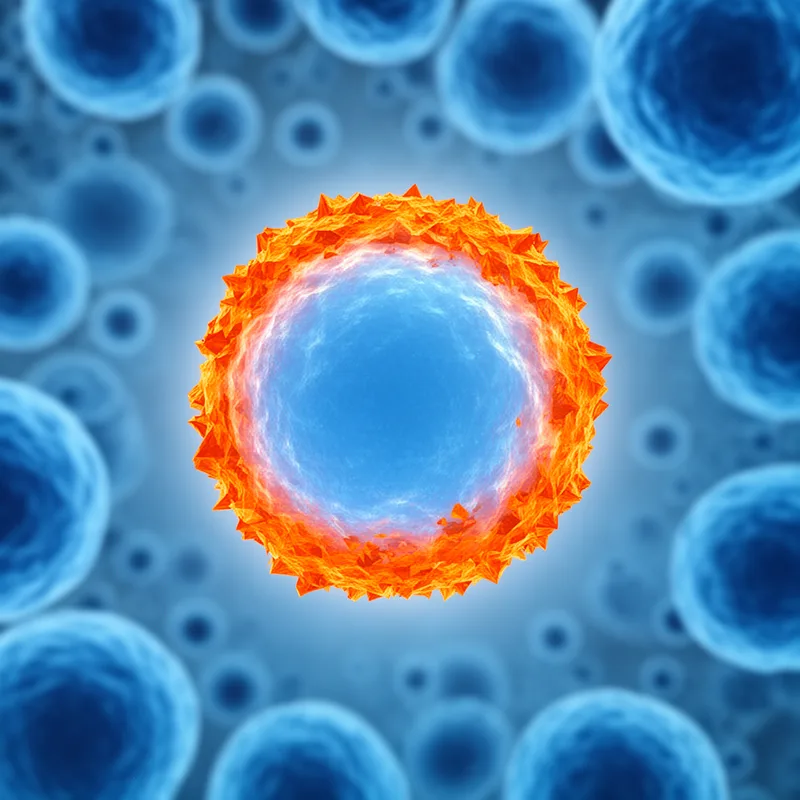
to revert
 7
7.8
7
7.8

- verb
- /rɪˈvɜrt/
- Specialized
- After experiencing a significant mutation, the gene may revert back to its original sequence.
Loading YouTube…
Watch on YouTubeSo this is really remarkable that aging is such a plastic process that can be slowed and in some cases, at least for some hallmarks, revert it.
- So this is really remarkable that aging is such a plastic process that can be slowed and in some cases, at least for some hallmarks, revert it.
Examples
-
How long before my genome reverts to its previous form?
-
Even "conversion" is not enough; their children can "revert" when the time is right.
Blog text (13) -
The only danger with a live virus... is the possibility that it will revert to wild type and kill the host.
-
That to me is the only way you can revert a cell back to its nascent self.
-
What would happen to modern humans if you reverted their psyche to an original state of nature?
-
There are even human stocks that have reverted to wetland living.
Academic text (1995) -
The plasmids were programmed with four genes to make the cells revert back to a primitive state.
Blog text (18) -
The Taliban's recent resurgence, however, threatens to lead Afghanistan to revert to its pre-9/11 role as a sanctuary for terrorists with global reach.
Academic text (2007) -
When a handful of dry loess is crumbled, it reverts to a fluffy powder easily carried by swirling air currents.
Academic text (1992) -
In an unstable environment, cells sometimes revert to a more primitive state to survive.
Synonyms
 24
7.5
24
7.5
To return to an earlier, less developed or worse state
 1
8.7
1
8.7
To go back to an earlier, worse state

To become worse or return to an earlier state
Antonyms
Surface Forms
Etymology
In biology, revert keeps the same sense of re- 'back' and vertere 'to turn'; when a gene, cell, or organism 'turns back' to an earlier form, scientists say it has reverted.