
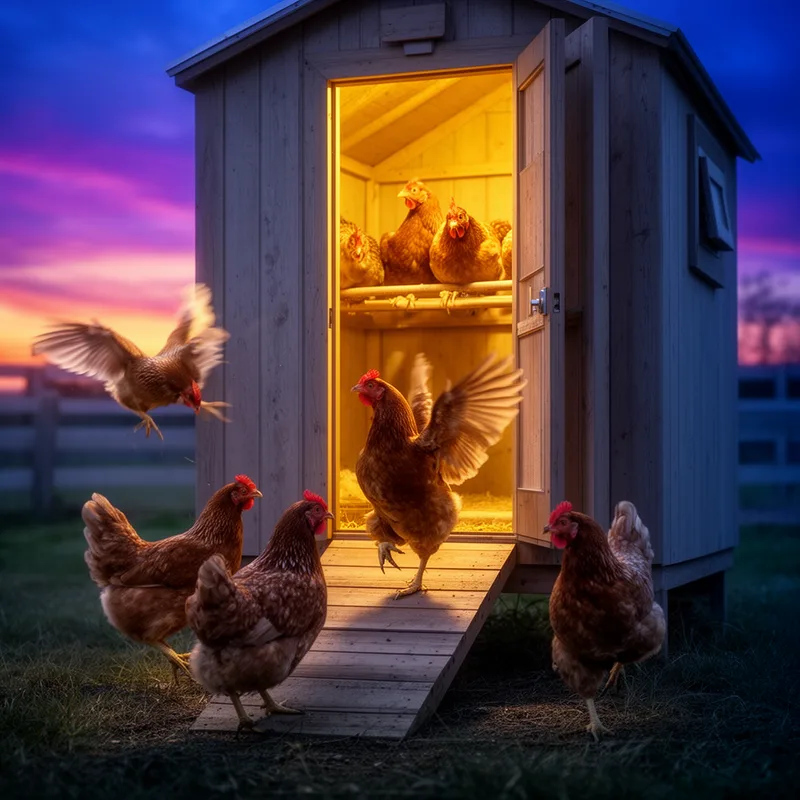
to return to roost
- phrasal verb
 :
volver al nido
:
volver al nido
- The birds return to roost at sunset.
Examples
-
Every evening, the sparrows return to roost in the old oak tree.
-
As dusk fell, the chickens returned to roost inside their coop.
-
Dozens of crows return to roost in the same spot near the river each night.
-
Every evening, the sparrows return to roost in the old oak tree.
-
As the sun began to set, all the birds returned to roost in the safety of the tall trees.
-
Every evening, the flock of geese flies home to return to roost in their chosen spot near the lake.
-
After a long day of foraging, the sparrows return to roost in the cozy barn for the night.
Synonyms

 ∞
1.0
∞
1.0

To return to the place where you live
 47
2.1
47
2.1
To return to a place or situation after a short time away
 16
4.2
16
4.2
To rest or sleep in a high place like a tree
 5
7.0
5
7.0
To return to the place where an animal was born or lives
Antonyms

How Regularly
 47
2.1
47
2.1
Surface Forms
Morphology
The meaning is directly and transparently derived from 'return' (to go back) + 'to' + 'roost' (a place where birds sleep); a learner who knows those constituents can infer it means birds coming back to their sleeping place. This verb + prepositional-phrase composition is cross-linguistically common and follows standard English patterns, making it predictable for a B1 learner.
Etymology
Return to roost comes from watching birds: in the evening they return to their roost, a safe place to sleep after a day of feeding. So the phrase means 'to come back to a resting place'.