
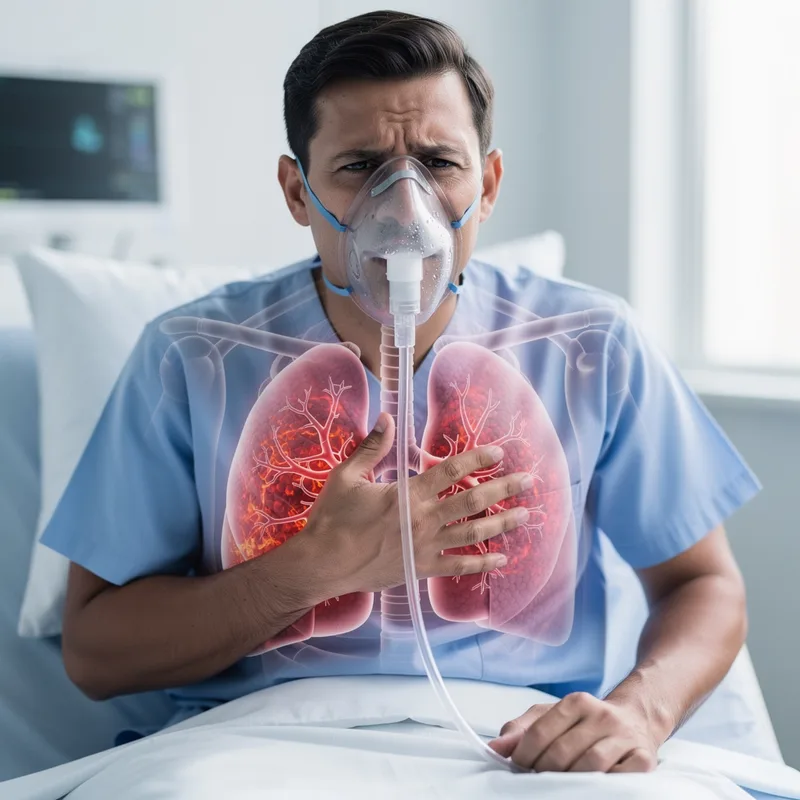
respiratory disease
 4
3.2
4
3.2

- noun
- /ˈrɛspəˌrɛtɔri dɪˈziz/
- Severe respiratory disease can result in symptoms such as persistent coughing and difficulty breathing.
- chronic respiratory disease
- acute respiratory disease
- severe respiratory disease
Loading YouTube…
Watch on YouTubeThey were dying of anemia, bilharzia, malaria, sepsis and mainly pulmonary and respiratory disease, pneumonia.
- They were dying of anemia, bilharzia, malaria, sepsis and mainly pulmonary and respiratory disease, pneumonia.
Examples
-
Smoking is a leading cause of respiratory diseases, damaging the lungs over time.
-
Many children suffer from respiratory disease due to poor air quality in urban areas.
-
Both presented with severe respiratory disease in advanced stages.
-
This disease is a respiratory disease, so the lungs are usually affected first, according to what doctors said.
-
Before this 1995 survey, neither the state nor the county had assessed specific respiratory disease rates.
Academic text (1998) -
Pollution of this type places those exposed at unacceptable levels of risk for respiratory disease.
Academic text (2002) -
The ferret had shown signs of respiratory disease since its arrival at the shelter.
Academic text (2012) -
One of the main causes of hospital admissions over this period, therefore, is exacerbation of respiratory disease.
Academic text (2010) -
Before the late 1960s, no medical research had linked inhalation of copper to respiratory disease.
Academic text (2002) -
The daily number of deaths from all respiratory diseases and all cardiovascular diseases was calculated.
Academic text (2008)
Synonyms
 3
3.4
3
3.4
A health problem that affects the lungs, nose, or throat and makes breathing difficult


 1
4.0
1
4.0
A disease that affects the lungs or other parts used for breathing
How Serious
- Specialized
121
4.3
 4
3.2
4
3.2
- Specialized
1
3.5
17
1.1
Surface Forms
Morphology
The meaning 'a disease affecting the organs of breathing' is directly and transparently derivable from 'respiratory' (pertaining to respiration) + 'disease' (a condition disrupting normal bodily functions). This adjective+noun composition is a regular, cross-linguistic medical naming pattern and would be understandable to a B1 learner who knows both constituents.
Etymology
The noun respiratory disease comes from the parts respiratory, a word meaning 'to breathe', and disease, meaning 'illness'. So, it paints a simple picture of the lungs or windpipe being sick and not working well, and it means 'an illness that affects breathing'.