
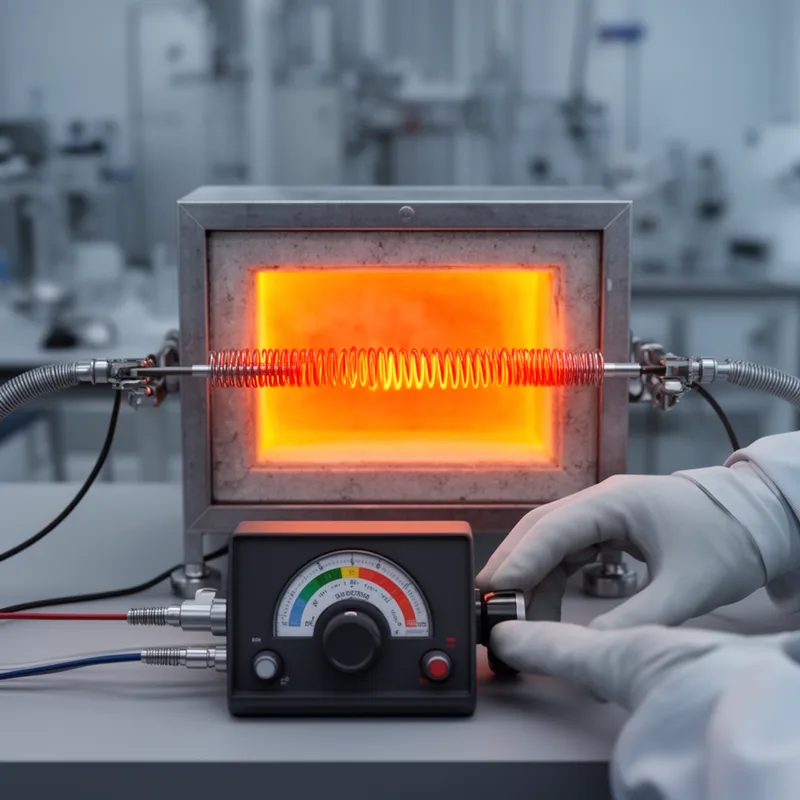
resistance pyrometer
- noun
- /rɪˈzɪstəns paɪˈrɒmɪtər/
- Specialized
- Unlike other thermometers, a resistance pyrometer relies on the change in resistance of a wire to measure temperature.
Examples
-
The laboratory technician calibrated the resistance pyrometer before conducting the experiment.
-
A resistance pyrometer is often used in industries that require precise temperature measurements at very high heat.
-
A resistance pyrometer is crucial.
-
The resistance pyrometer is essential for measuring high temperatures.
-
A resistance pyrometer measures high temperatures by detecting changes in the electrical resistance of a heated wire.
-
In metal processing, a resistance pyrometer provides accurate readings for temperatures exceeding 1000 degrees Celsius.
-
The resistance pyrometer is used in various industrial applications to ensure efficient temperature control.
Synonyms

A tool that measures temperature by how easily electricity passes through a metal wire

A tool that measures temperature using a platinum wire that changes how electricity flows when heated

An instrument that measures very high temperatures in furnaces and kilns

A tool that measures very high temperatures by comparing a hot object's light color to a known value

A device that measures very high temperatures by looking at the color of light from hot objects
A tool that measures temperature of hot objects without touching them
Surface Forms
Morphology
The meaning is directly compositional: 'pyrometer' is a temperature-measuring instrument and 'resistance' specifies the principle used, so a learner who knows both words can infer it is a pyrometer that uses electrical resistance to measure temperature. This noun–noun compound follows a common, cross-linguistically transparent formation pattern and does not require idiomatic knowledge.
Etymology
The noun resistance pyrometer comes from how the tool measures heat: a pyrometer is a device for very high temperatures and it reads a thin wire's changing resistance as the wire gets hot. So the name literally means 'a temperature meter that uses resistance', which explains why it 'measures high temperatures'.

