
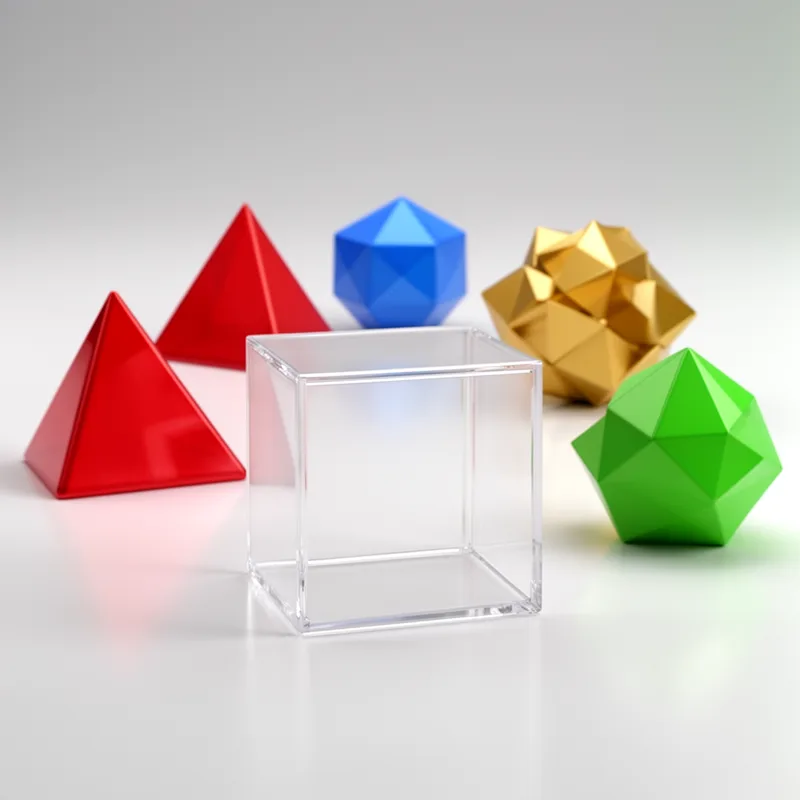
regular convex polyhedron
- noun
- /ˈrɛɡjələr ˈkɒnvɛks ˌpɒlɪˈhɛdrən/
- Specialized
- A cube is an example of a regular convex polyhedron with six square faces.
Examples
-
The five regular convex polyhedra have fascinated mathematicians for centuries.
-
Every regular convex polyhedron has faces that are identical regular polygons.
-
A regular convex polyhedron has faces that are all the same shape.
-
The regular convex polyhedron is a fundamental shape in geometry.
-
A cube is an example of a regular convex polyhedron with six square faces.
-
Every regular convex polyhedron is characterized by having faces that are identical regular polygons.
-
Mathematicians study the five regular convex polyhedra to understand their unique properties in geometry.
Synonyms



 1
9.0
1
9.0
A 3D shape with all the same regular flat faces, like a cube or tetrahedron

A solid shape with identical flat faces that are regular polygons like a cube

A solid with the same flat faces and equal angles, like a cube

A three-dimensional shape whose faces are the same flat shapes with all sides equal and equal angles between them

A three-dimensional shape with identical regular flat faces, like a cube
Surface Forms
Morphology
regular + convex + polyhedron
The phrase is compositionally built from clear constituents: 'polyhedron' (a 3-D shape with flat faces) modified by 'convex' (curving outward) and 'regular' (symmetrical/equal faces), so the overall meaning — a symmetric convex 3-D shape with regular faces — follows directly from the parts. Although the term is technical, the adjective+noun composition is transparent and would be understandable to a B1 learner who already knows the constituent words and basic geometric vocabulary.
Etymology
Regular convex polyhedron explains its name: regular means all the flat faces are the same shape, convex means the shape has no dents, and polyhedron is a 'solid' with flat faces. So the phrase says it is a 3D solid whose faces are identical regular polygons, which is why it names the five special Platonic solids.