
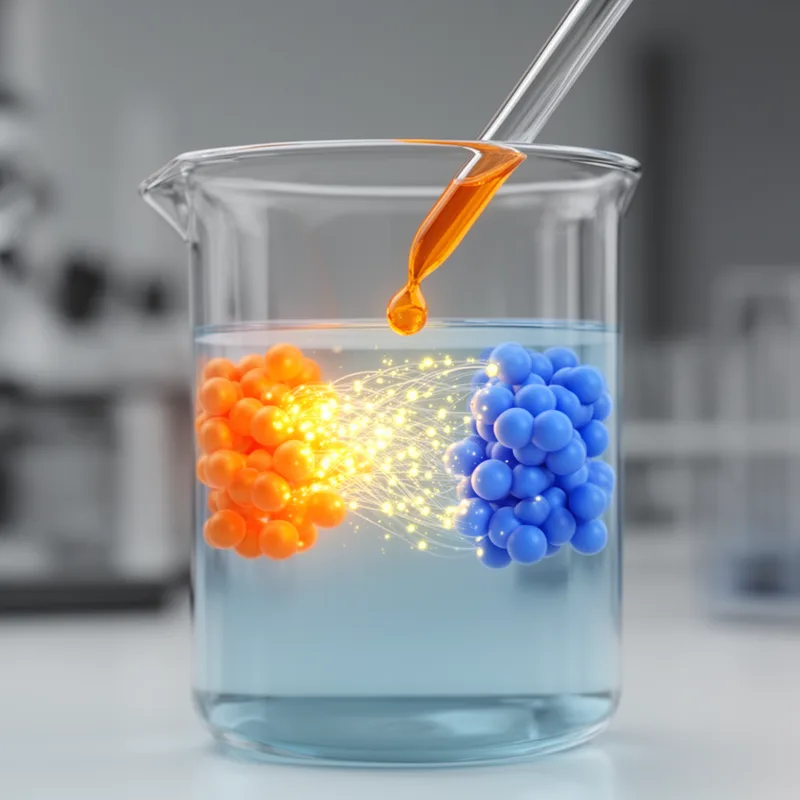
reductant
- noun
- /rɪˈdʌktənt/
- Specialized
- In a reducing atmosphere, various substances can act as reductants, facilitating the transformation of other compounds.
Examples
-
There, the diesel fuel and its partly reacted products, or the ammonia derived from urea, act as reductants, Reitz said.
Academic text (2004) -
In chemical reactions, a reductant donates electrons to another substance, causing it to be reduced.
-
There are lots of reductants inside the cells, so I'm just going to say reductant.
-
So this green part is the reductant and this part is a mimic of the of the hydroxymethylglutaril Co A.
-
When using certain chemicals in photography, reductants play a crucial role in developing the images.
Synonyms


 1
8.3
1
8.3
A chemical that gives electrons to another substance to change it
A substance that gives electrons to another substance in a chemical reaction
Antonyms
Surface Forms
Morphology
reductant = reduce (transparent) = reduct + ant
Formed from the combining stem 'reduct-' (related to the verb 'reduce') plus the agentive suffix '-ant'; learners who know 'reduce' and common agentive suffixes can infer 'a substance that reduces'.
Etymology
Reductant comes from the verb reduce, which means 'make smaller' or 'take away', and the ending -ant meaning 'one that does'. In chemistry, to reduce a substance is to add electrons to it, so a reductant is the thing that 'gives electrons' to another substance and so causes the other to become reduced.