
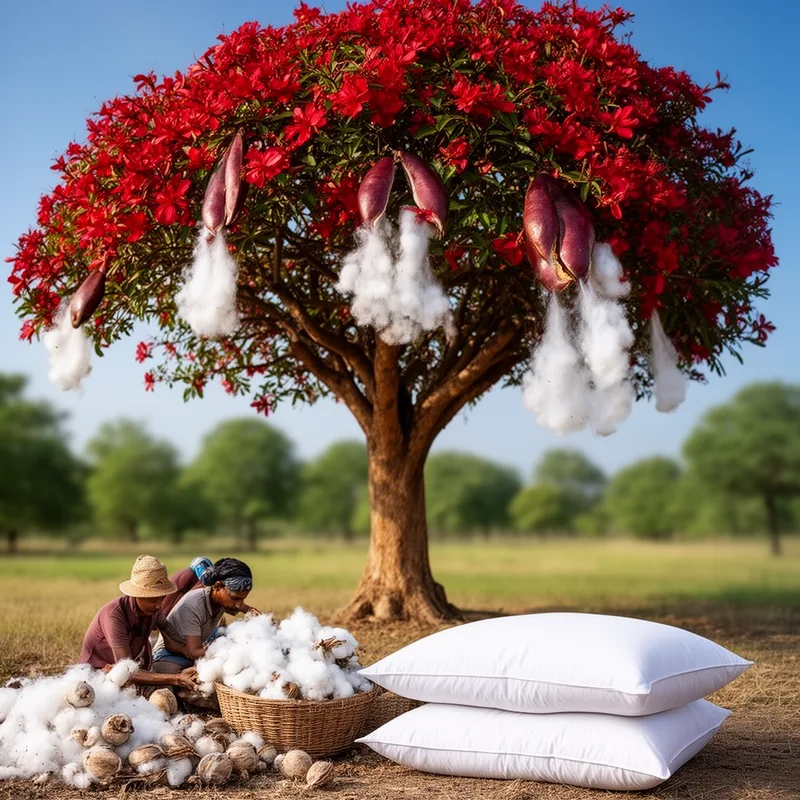
red silk-cotton tree
- noun
- Indian
- The red silk-cotton tree is known for its large, showy flowers and its cottony seed fibers.
Examples
-
Farmers in the region harvest the fibers of the red silk-cotton tree for use in stuffing pillows.
-
Unlike kapok, the fibers from the red silk-cotton tree are considered of lesser quality for insulation.
-
The red silk-cotton tree is known for its beautiful flowers.
-
Many red silk-cotton trees grow in the tropical forests of India.
-
Farmers in the region harvest the fibers of the red silk-cotton tree for use in stuffing pillows.
-
The red silk-cotton tree is known for its large, showy flowers and its cottony seed fibers.
-
Unlike kapok, the fibers from the red silk-cotton tree are considered of lesser quality for insulation.
Synonyms
An Asian tree from India that makes silk cotton fibers used to stuff pillows and mattresses

A tall East Indian tree whose soft fibers fill mattresses and pillows
A tree from India whose silk-like fibers are used for stuffing pillows and mattresses
A very large tropical tree whose trunk has deep grooves and seed pods of soft, fluffy material used for stuffing
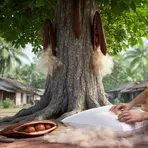
A large tropical tree with a rough trunk and seed pods full of soft fibers used for pillows
Surface Forms
Morphology
The phrase is compositional: 'red' describes color, 'silk-cotton' denotes a type of fiber (literally silk-like cotton) or the product associated with the plant, and 'tree' names the plant — together yielding a tree that produces silk-like cotton and is red in some respect. Even if 'silk-cotton' is less common, its internal parts ('silk' + 'cotton') make the referent predictable, and botanical naming conventions are cross-linguistically similar, so a B1 learner who knows the constituents will likely infer the meaning.
Etymology
Red silk-cotton tree is named for its bright red flowers and the soft, cotton-like seed fibers it produces. The words silk and cotton describe those silky, fluffy seeds that people used as 'stuffing', so the name points to the tree that gives these fibers today.

